revere
US /rɪˈvɪr/
・UK /riˈviə/
B2TOEIC
v.t.Transitive VerbTo give someone great respect and loyalty
The villagers revere their wise headman
Video subtitles
FULL SPEECH: President Joe Biden gives address after dropping out of 2024 election

- Franklin Roosevelt, who inspired us to reject fear. I revere this office, but I love my country more.
Franklin Roosevelt, who inspired us to reject fear. I revere this office, but I love my country more.
- I revere this office, but I love my country more.
I revere this office, but I love my country more.
F1 The Movie: Behind The Scenes With Brad Pitt | Exclusive Interview

- You know, I revere the sport.
You know, I revere the sport.
- I revere those within the sport.
I revere those within the sport.
Death By China 2012 (with subtitles)

- Ryan O'Shaughnessy is the chairman of Revere Copper, a company founded by none other than Paul Revere and the oldest manufacturer in America.
Ryan O'Shaughnessy is the chairman of Revere Copper, a company founded by none other than Paul Revere and the oldest manufacturer in America.
- I mean, how American can you get other than Revere, Coca-Cola?
I mean, how American can you get other than Revere, Coca-Cola?
Richard Dawkins - The Genius of Charles Darwin - Part 3: God Strikes Back [+Subs]
![Richard Dawkins - The Genius of Charles Darwin - Part 3: God Strikes Back [+Subs]](https://img.youtube.com/vi/6M-6itXK2XI/hqdefault.jpg)
- I revere Charles Darwin.
I revere Charles Darwin.
- 'I revere Charles Darwin. He made sense of life.
'I revere Charles Darwin. He made sense of life.
Lying On A First Date

- That damn Paul Revere ruined everything for us. Right, my chums, what will it be? I didn't realize I was in England. I'm sorry, I didn't realize you also had an accent. I slipped back into my accent once I started talking to you lot.
That damn Paul Revere ruined everything for us. Right, my chums, what will it be? I didn't realize I was in England. I'm sorry, I didn't realize you also had an accent. I slipped back into my accent once I started talking to you lot.
- That damn Paul Revere ruined everything for us.
That damn Paul Revere ruined everything for us.
26 Fascinating Founding Fathers Facts - mental_floss - List Show (242)

- In order to get to Lexington to one of these impending British invasions, Revere had to travel through Medford, the rum capital of America.
In order to get to Lexington to one of these impending British invasions, Revere had to travel through Medford, the rum capital of America.
- In order to get to Lexington to warn of the impending British invasion, Revere had to travel through Medford, the rum capital of America.
In order to get to Lexington to warn of the impending British invasion, Revere had to travel through Medford, the rum capital of America.
Boston Vacation Travel Guide | Expedia

- the Granary Burying Ground, the final resting place of Samuel Adams, Paul Revere, and
the Granary Burying Ground, the final resting place of Samuel Adams, Paul Revere, and
- Stop by the 17th-century home of Paul Revere, the patriot immortalized for his famous all-night ride to Lexington, warning that "the British were coming." Walking across the Charles River brings Freedom Trail walkers to the Bunker Hill Monument, where the newly formed Colonial Army first stood up to the redcoats in the American War of Independence.
Stop by the 17th-century home of Paul Revere, the patriot immortalized for his famous all-night ride to Lexington, warning that "the British were coming." Walking across the Charles River brings Freedom Trail walkers to the Bunker Hill Monument, where the newly formed Colonial Army first stood up to the redcoats in the American War of Independence.
Boston, Estados Unidos | Expedia.com.br

- the Granary Burying Ground, the final resting place of Samuel Adams, Paul Revere, and
the Granary Burying Ground, the final resting place of Samuel Adams, Paul Revere, and
- Stop by the 17th-century home of Paul Revere, the patriot immortalized for his famous all-night ride to Lexington, warning that "the British were coming." Walking across the Charles River brings Freedom Trail walkers to the Bunker Hill Monument, where the newly formed Colonial Army first stood up to the redcoats in the American War of Independence.
Stop by the 17th-century home of Paul Revere, the patriot immortalized for his famous all-night ride to Lexington, warning that "the British were coming." Walking across the Charles River brings Freedom Trail walkers to the Bunker Hill Monument, where the newly formed Colonial Army first stood up to the redcoats in the American War of Independence.
Barack Obama's Top 10 Rules For Success

- In contrast, the leaders we revere, the businesses and institutions that last, they are not generally the result of a narrow pursuit of popularity or personal advancement but of devotion to some bigger purpose: the preservation of the union or the determination to lift a country out of a depression, the creation of a quality product, a commitment to your customers, your workers, your shareholders, and
In contrast, the leaders we revere, the businesses and institutions that last, they are not generally the result of a narrow pursuit of popularity or personal advancement but of devotion to some bigger purpose: the preservation of the union or the determination to lift a country out of a depression, the creation of a quality product, a commitment to your customers, your workers, your shareholders, and
- In contrast, the leaders we revere,
In contrast, the leaders we revere,
The Dangers of Missing a Sense of Self
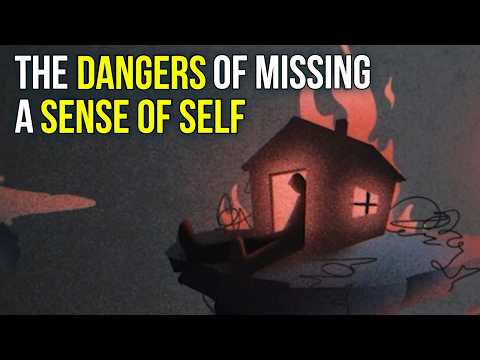
- I supposed to like? Not what do I approve of, but what is it good to approve of? Not what do I find funny, but when should I laugh? When we watch them carefully, we may notice rapid almost arbitrary shifts in their views. They love this artist or jacket or political opinion, but in fact no, they prefer another one and then another. They are implicitly constantly calling out to a world which puzzles and terrifies them. Who should I be? What is it right to think? These poor souls tend to be the products of very particular sorts of childhood. When little, they will have faced environments in which their uniqueness was never a matter of concern to their self-absorbed caregivers. Mother or father were never able to push their needs aside for a time to drop to their level and ask, who is this extraordinary new member of the human race whom I have helped to create? What are their particular inclinations and loves and hates? What do they have to tell me? They were far too perturbed and fragile for such self-abnegation. They couldn't attune to the child and so the child could not, in turn, attune to themselves. For we can only find out what we think if, in the early days, someone was sufficiently patient to facilitate our own process of self-discovery, if someone didn't shout over us and say, don't be ridiculous when we ventured forth an opinion, or didn't use all the resources of adulthood to insist that their way was the only way. The self-less child will have had to cope with an egotist who simply coerced them to follow an already predetermined agenda. These are the books you need to think are amazing. The only way to be a good boy or girl is to win at this kind of sport or that school subject and later to be a banker or a vet and so on, all without in any way bothering to check in on how this might have felt to the small person biologically programmed to adore and revere them. From this was drawn a moral. Survival depends on compliance. The price of existing is the sacrifice of one's real identity. Self-less people can be deeply charming. Their manner can be exquisitely polite and mellifluous. They are built to work out what we like and to reflect it back to us. They aren't merely pretending to go along with what we think for a few minutes. They genuinely seek out our worldview and lose themselves in it. But these people also pose grave dangers. For no one forgoes their sense of self without storing up a significant degree of rage and dissatisfaction. Yet this can never emerge cleanly because the candid expression of their needs was never something that these selfless people were allowed to practice. The first we're liable to learn about a problem they have with us is when it's become unmanageable. We can be most at risk if we fall in love with these elusive, beguiling, shapeshifting people. At first, it's our tastes they want to understand. It's the books and places and foods we like that seem especially interesting to them. We can allow ourselves a dangerous moment of self-indulgence. We're made to feel marvellous and aren't suspicious enough to wonder why.
I supposed to like? Not what do I approve of, but what is it good to approve of? Not what do I find funny, but when should I laugh? When we watch them carefully, we may notice rapid almost arbitrary shifts in their views. They love this artist or jacket or political opinion, but in fact no, they prefer another one and then another. They are implicitly constantly calling out to a world which puzzles and terrifies them. Who should I be? What is it right to think? These poor souls tend to be the products of very particular sorts of childhood. When little, they will have faced environments in which their uniqueness was never a matter of concern to their self-absorbed caregivers. Mother or father were never able to push their needs aside for a time to drop to their level and ask, who is this extraordinary new member of the human race whom I have helped to create? What are their particular inclinations and loves and hates? What do they have to tell me? They were far too perturbed and fragile for such self-abnegation. They couldn't attune to the child and so the child could not, in turn, attune to themselves. For we can only find out what we think if, in the early days, someone was sufficiently patient to facilitate our own process of self-discovery, if someone didn't shout over us and say, don't be ridiculous when we ventured forth an opinion, or didn't use all the resources of adulthood to insist that their way was the only way. The self-less child will have had to cope with an egotist who simply coerced them to follow an already predetermined agenda. These are the books you need to think are amazing. The only way to be a good boy or girl is to win at this kind of sport or that school subject and later to be a banker or a vet and so on, all without in any way bothering to check in on how this might have felt to the small person biologically programmed to adore and revere them. From this was drawn a moral. Survival depends on compliance. The price of existing is the sacrifice of one's real identity. Self-less people can be deeply charming. Their manner can be exquisitely polite and mellifluous. They are built to work out what we like and to reflect it back to us. They aren't merely pretending to go along with what we think for a few minutes. They genuinely seek out our worldview and lose themselves in it. But these people also pose grave dangers. For no one forgoes their sense of self without storing up a significant degree of rage and dissatisfaction. Yet this can never emerge cleanly because the candid expression of their needs was never something that these selfless people were allowed to practice. The first we're liable to learn about a problem they have with us is when it's become unmanageable. We can be most at risk if we fall in love with these elusive, beguiling, shapeshifting people. At first, it's our tastes they want to understand. It's the books and places and foods we like that seem especially interesting to them. We can allow ourselves a dangerous moment of self-indulgence. We're made to feel marvellous and aren't suspicious enough to wonder why.
- All without in any way bothering to check in on how this might have felt to the small person biologically programmed to adore and revere them.
All without in any way bothering to check in on how this might have felt to the small person biologically programmed to adore and revere them.