reactant
US /riˈæktənt/
・UK /riˈæktənt/
B1
n.NounChemical present in a chemical reaction
The reactant will release a certain gas
Video subtitles
Stanford Nanofabrication Facility: Dry Etching - Dry Etching Mechanisms (Part 3 of 4)
- Radicals, so we basically talk about radicals going down to the surface, but the reactant can be blocked.
Radicals, so we basically talk about radicals going down to the surface, but the reactant can be blocked.
Le Chatelier's Principle Part 1 | Reactions | Chemistry | FuseSchool
- Let's examine a hypothetical reversible reaction at equilibrium, where reactant A reacts with reactant B to form product C and product D.
Let's examine a hypothetical reversible reaction at equilibrium, where reactant A reacts with reactant B to form product C and product D.
- For this stress, we will examine another hypothetical reaction at equilibrium, where reactant A reacts with 2 moles of reactant B to form product C and product D.
For this stress, we will examine another hypothetical reaction at equilibrium, where reactant A reacts with 2 moles of reactant B to form product C and product D.
Stanford Nanofabrication Facility: Dry Etching - Introduction (Part 1 of 4)
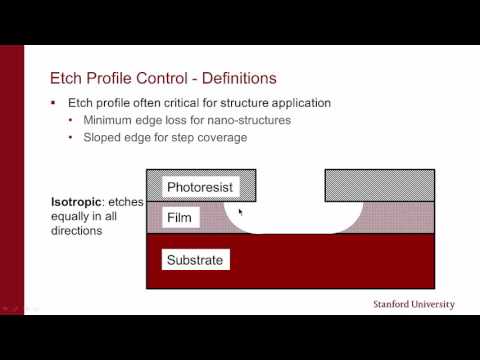
- We have a reactant that indicates fluorine coming down the surface, etching reacting with this surface, and
We have a reactant that indicates fluorine coming down the surface, etching reacting with this surface, and
- And we have local generation of reactant for radicals.
And we have local generation of reactant for radicals.