prefix
US /ˈpriˌfɪks/
・UK /'pri:fɪks/
B2
n.NounPart of a word added to the front, e.g. UNhappy
The prefix 'un-' means 'not.'
Video subtitles
Israel-Gaza war: a month on: BBC News Review

- That's right. De-escalate means the size or level of violence becomes smaller rather than bigger, and you'll notice that it has this prefix de- at the beginning.
That's right. De-escalate means the size or level of violence becomes smaller rather than bigger, and you'll notice that it has this prefix de- at the beginning.
- That prefix is often used to mean the negative or the opposite of something.
That prefix is often used to mean the negative or the opposite of something.
France protects abortion: BBC News Review

- it has the prefix en- which is about something being inside something.
it has the prefix en- which is about something being inside something.
Brazil floods: BBC News Review

- And when we add the prefix dis-, it actually means
And when we add the prefix dis-, it actually means
Cyber hackers hacked: BBC News Review

- We all know what 'famous' means and then there's that prefix
We all know what 'famous' means and then there's that prefix
- you're right - when we see the prefix 'im' or 'in' it usually means
you're right - when we see the prefix 'im' or 'in' it usually means
Elon Musk's brain chip: BBC News Review

- here. You can see the prefix 'im-' which means to put in or to go in.
here. You can see the prefix 'im-' which means to put in or to go in.
How to pronounce ‘A’ in English (It's not that easy!)

- Sometimes you have a prefix, like atypical, amoral, same A sound, but you can also do it with an A-Y, play, play.
Sometimes you have a prefix, like atypical, amoral, same A sound, but you can also do it with an A-Y, play, play.
- Sometimes you have a prefix like "atypical", "amoral".
Sometimes you have a prefix like "atypical", "amoral".
Don't Try To Memorize Vocabulary

- Uh, I'll sometimes look at them in alphabetical order just to see the words that have the same, you know, prefix, because that can help.
Uh, I'll sometimes look at them in alphabetical order just to see the words that have the same, you know, prefix, because that can help.
- Uh, I'll sometimes look at them in alphabetical order just to see the words that have the same, you know, prefix because that can help.
Uh, I'll sometimes look at them in alphabetical order just to see the words that have the same, you know, prefix because that can help.
Which country has the best schools? ⏲️ 6 Minute English

- We use the prefix out to say that someone or something is better at doing something.
We use the prefix out to say that someone or something is better at doing something.
- We use the prefix 'out' to say that someone or something is better at doing something.
We use the prefix 'out' to say that someone or something is better at doing something.
"Prefix or Suffix?" by The Bazillions
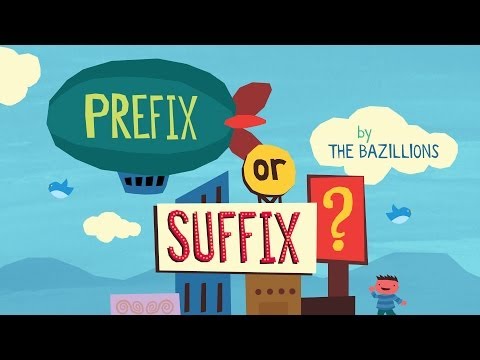
- Before the root of a word, before the word is heard, that's a prefix, there it sits.
Before the root of a word, before the word is heard, that's a prefix, there it sits.
- That's a prefix, there it sits.
That's a prefix, there it sits.
English Vocabulary: Roots, Prefixes and Suffixes
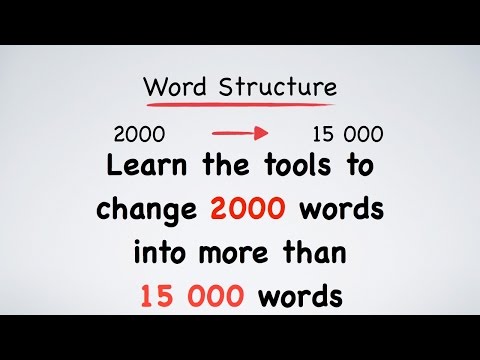
- We will cover the terms morpheme, root, affix, prefix, suffix, grammatical suffix, derivational suffix, and word family.
We will cover the terms morpheme, root, affix, prefix, suffix, grammatical suffix, derivational suffix, and word family.
- 'prefix'
'prefix'