outgrown
US /ˌaʊt'ɡroʊn/
・UK /ˌaʊt'ɡrəʊn/
C2
v.i.Intransitive VerbTo grow too large so something doesn't fit
Our business has outgrown our small town and is now international
Video subtitles
HOUSEPLANT CARE TIPS FOR BEGINNERS » + printable guide
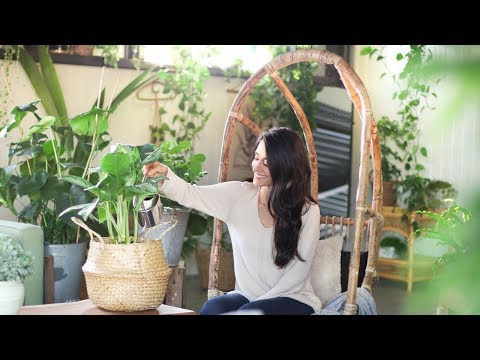
- That way when you're at the plant store You can check the tag to see if it's going to be an appropriate match and while you're at the plant store Anyway, there's also another couple things you might want to consider So when you found a really beautiful healthy plant that you know is the one that you want to take home One of the things I recommend doing is very gently Take the plant out of the pot just to see what the root situation is like here You can see that there's a whole bunch of roots along the outside and on the bottom So it might be a good idea to just buy a larger inner pot that you can then transfer it to you can also look For a nice outer pot that will fit the repotted plant while you're still at the nursery You It's incredibly important that the pot that your plant is in has holes because we need the water to be able to drain But not all pots with holes are created equal like this one for example also has holes But there's a valley beneath the holes and this is a place where water can collect and the problem with water Collecting is it can cause the roots to rot which might mean the plant could eventually die So the point here we want to make sure we get a pot with holes at the bottom most point of the container So when we were at the nursery we talked about the importance of repotting plants that have outgrown their current home But a lot of plants don't take well to a change in their environment But I'm going to share with you a technique that my mom taught me and it works really really well Essentially all you do is first wet the soil before adding it to the new pot So you want it to be moist enough that it sticks together But you don't want it to be dripping wet either and the reason that this works is it encourages the roots to go out and Explore this new wet territory, and it helps it to settle into its new environment a little bit better Then we'll transfer the soil along the bottom and the sides of the new pot We'll gently remove the plant from its nursery container and transfer it to its new home and add some extra soil around the sides And along the top you can gently press down on it as well But not too much because we want to give the roots some room to branch out and then at the very end We're going to water it just a little bit so that the old soil gets a bit of moisture as well Over-watering and under-watering plants is probably the single most common reason why a lot of house plants die But every plant is very specific when it comes to its watering requirements But there are a few important rules of thumb that might help.
That way when you're at the plant store You can check the tag to see if it's going to be an appropriate match and while you're at the plant store Anyway, there's also another couple things you might want to consider So when you found a really beautiful healthy plant that you know is the one that you want to take home One of the things I recommend doing is very gently Take the plant out of the pot just to see what the root situation is like here You can see that there's a whole bunch of roots along the outside and on the bottom So it might be a good idea to just buy a larger inner pot that you can then transfer it to you can also look For a nice outer pot that will fit the repotted plant while you're still at the nursery You It's incredibly important that the pot that your plant is in has holes because we need the water to be able to drain But not all pots with holes are created equal like this one for example also has holes But there's a valley beneath the holes and this is a place where water can collect and the problem with water Collecting is it can cause the roots to rot which might mean the plant could eventually die So the point here we want to make sure we get a pot with holes at the bottom most point of the container So when we were at the nursery we talked about the importance of repotting plants that have outgrown their current home But a lot of plants don't take well to a change in their environment But I'm going to share with you a technique that my mom taught me and it works really really well Essentially all you do is first wet the soil before adding it to the new pot So you want it to be moist enough that it sticks together But you don't want it to be dripping wet either and the reason that this works is it encourages the roots to go out and Explore this new wet territory, and it helps it to settle into its new environment a little bit better Then we'll transfer the soil along the bottom and the sides of the new pot We'll gently remove the plant from its nursery container and transfer it to its new home and add some extra soil around the sides And along the top you can gently press down on it as well But not too much because we want to give the roots some room to branch out and then at the very end We're going to water it just a little bit so that the old soil gets a bit of moisture as well Over-watering and under-watering plants is probably the single most common reason why a lot of house plants die But every plant is very specific when it comes to its watering requirements But there are a few important rules of thumb that might help.
- So when we were at the nursery, we talked about the importance of repotting plants that have outgrown their current home,
So when we were at the nursery, we talked about the importance of repotting plants that have outgrown their current home,
Quiz: Are You Stuck in the Victim Mindset? (self-test for awareness)
- Growing into empowerment, 40 to 45 points, you've outgrown many of your old stories,
Growing into empowerment, 40 to 45 points, you've outgrown many of your old stories,
- You've outgrown many of your old stories and you're learning how to write new ones.
You've outgrown many of your old stories and you're learning how to write new ones.
Biblical Series I: Introduction to the Idea of God

- And then tried to understand it from that perspective, rather than to think, for example, well, it's a collection of superstitions that we've somehow outgrown.
And then tried to understand it from that perspective, rather than to think, for example, well, it's a collection of superstitions that we've somehow outgrown.
- But what I've tried to do is to think there's probably more to this than I know and then try to understand it from that perspective rather than to think, for example, well, it's a collection of superstitions that we've somehow outgrown.
But what I've tried to do is to think there's probably more to this than I know and then try to understand it from that perspective rather than to think, for example, well, it's a collection of superstitions that we've somehow outgrown.
How To Be A Better Friend To Others

- Maybe you've outgrown each other, or perhaps life changes like moving away have created a distance.
Maybe you've outgrown each other, or perhaps life changes like moving away have created a distance.
- Maybe you've outgrown each other, or perhaps life changes, like moving away, have created a distance.
Maybe you've outgrown each other, or perhaps life changes, like moving away, have created a distance.
Inside Tokyo's WORST TINY APARTMENT
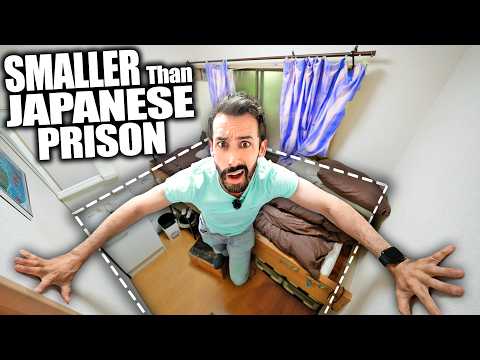
- I had that time in my life I feel i've outgrown that now But if you don't mind spending a lot of time on the train because it did take me well over an hour from the city center To get here, but I would love to hear what you think.
I had that time in my life I feel i've outgrown that now But if you don't mind spending a lot of time on the train because it did take me well over an hour from the city center To get here, but I would love to hear what you think.
- I feel I've outgrown that now.
I feel I've outgrown that now.
2 Hours of Pure Happiness at the Krusty Krab! 🍔 | @SpongeBobOfficial

- As much as I hate to admit it, I've outgrown the Krusty Krab.
As much as I hate to admit it, I've outgrown the Krusty Krab.
- Much as I hate to admit it, I've outgrown the Krusty Krab.
Much as I hate to admit it, I've outgrown the Krusty Krab.
Life is Short (How to Spend It Wisely)

- The longer you stay in a role you've outgrown, the harder it is to leave.
The longer you stay in a role you've outgrown, the harder it is to leave.
- The longer you stay in a role you've outgrown, the harder it is to leave.
The longer you stay in a role you've outgrown, the harder it is to leave.
How to Manage Change When You're Quitting Your Job
- Do you have any advice for managing the transition and for staying patient and energized when I felt like I've outgrown my job?"
Do you have any advice for managing the transition and for staying patient and energized when I felt like I've outgrown my job?"
- I felt like I’ve outgrown my job.
I felt like I’ve outgrown my job.
Remember That EVERYONE Is Lonely
- One of the reasons why we tend not to make friends as often as we might comes down to a powerful background idea whose full destructive force we may not even be aware of, the belief that any decent person already has all the friends they need. Somewhere in our minds, the notion has been lodged that only very sad and inept people would, at this stage in their lives, still have a space in their social agenda for a new entrant. Almost everyone else – anyone worth knowing, talented, interesting or good – would long ago have acquired the gang to which they are now continually and irredeemably wedded. What this punishing idea misses is the extent to which a feeling of loneliness and disenchantment is in reality an ongoing and universal possibility, in no way limited to those of reduced appeal. Right now, the enchanting actor is, despite the crowds, perhaps lonely, as is the fated concert pianist, the renowned biologist, the skilled airline pilot, the miraculous neurosurgeon and that rather nice-looking person you've just spotted in the corner of the room, laughing animatedly with a group of fashionable companions. It's open to anyone of sensitivity and charm to fail to find the right sort of allies, to have outgrown their friends from school or university, to not have landed on congenial spirits at work or in the sports centre and therefore to be spending a lot of their evenings on their own. And we can know this for certain of other people because we know it, first and foremost, from a very reliable source – ourselves. We need to battle the modest part of our minds that reads our isolation as a selective punishment and vanquish it with a crucial bit of evidence available directly from our own experience. Other people who know us at a social level almost certainly find it hard to imagine the degree to which we are exposed to loneliness and how much we would still like to locate a wise, tender, funny and interesting new friend. We have built a predominantly cold and guarded society by imagining a thesis which we implicitly know to be untrue on the basis of our experience. The next time we spot an interesting person, we should stop contravening the moral of our own lives. We don't have exactly the right people in our social circle and nor, most probably, do they. So we can afford to shed our false background ideas of social life and go up and say hello.
One of the reasons why we tend not to make friends as often as we might comes down to a powerful background idea whose full destructive force we may not even be aware of, the belief that any decent person already has all the friends they need. Somewhere in our minds, the notion has been lodged that only very sad and inept people would, at this stage in their lives, still have a space in their social agenda for a new entrant. Almost everyone else – anyone worth knowing, talented, interesting or good – would long ago have acquired the gang to which they are now continually and irredeemably wedded. What this punishing idea misses is the extent to which a feeling of loneliness and disenchantment is in reality an ongoing and universal possibility, in no way limited to those of reduced appeal. Right now, the enchanting actor is, despite the crowds, perhaps lonely, as is the fated concert pianist, the renowned biologist, the skilled airline pilot, the miraculous neurosurgeon and that rather nice-looking person you've just spotted in the corner of the room, laughing animatedly with a group of fashionable companions. It's open to anyone of sensitivity and charm to fail to find the right sort of allies, to have outgrown their friends from school or university, to not have landed on congenial spirits at work or in the sports centre and therefore to be spending a lot of their evenings on their own. And we can know this for certain of other people because we know it, first and foremost, from a very reliable source – ourselves. We need to battle the modest part of our minds that reads our isolation as a selective punishment and vanquish it with a crucial bit of evidence available directly from our own experience. Other people who know us at a social level almost certainly find it hard to imagine the degree to which we are exposed to loneliness and how much we would still like to locate a wise, tender, funny and interesting new friend. We have built a predominantly cold and guarded society by imagining a thesis which we implicitly know to be untrue on the basis of our experience. The next time we spot an interesting person, we should stop contravening the moral of our own lives. We don't have exactly the right people in our social circle and nor, most probably, do they. So we can afford to shed our false background ideas of social life and go up and say hello.
- It's open to anyone of sensitivity and charm to fail to find the right sort of allies—to have outgrown their friends from school or university, to not have landed on congenial spirits at work or in the sports centre,
It's open to anyone of sensitivity and charm to fail to find the right sort of allies—to have outgrown their friends from school or university, to not have landed on congenial spirits at work or in the sports centre,
The Psychology of People Who Don’t Post Their Photos on Social Media
- They've just outgrown the need to be seen.
They've just outgrown the need to be seen.
- They've just outgrown the need to be seen.
They've just outgrown the need to be seen.