orbits
US
・UK
B1
v.i.Intransitive VerbTo go around another object (often in space)
The earth orbits the Sun everyday
Video subtitles
The Moons of Mars Explained -- Phobos & Deimos MM#2
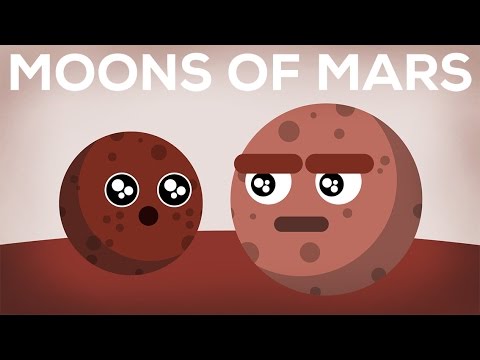
- Phobos orbits Mars at a average distance of 9,400 kilometres, once every 7½ hours.
Phobos orbits Mars at a average distance of 9,400 kilometres, once every 7½ hours.
- Phobos orbits Mars at a average distance of 9,400 kilometres, once every 7½ hours.
Phobos orbits Mars at a average distance of 9,400 kilometres, once every 7½ hours.
What Is Something?

- Gravity isn't just the rule for orbits around the sun or apples falling from trees.
Gravity isn't just the rule for orbits around the sun or apples falling from trees.
The ISS Will Crash to Earth Soon, But Why?
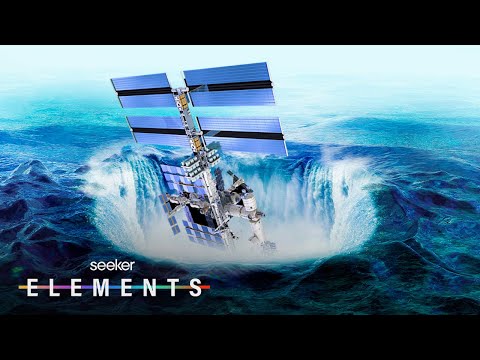
- It orbits the Earth every 90 minutes, traveling at 8 km/s,
It orbits the Earth every 90 minutes, traveling at 8 km/s,
- It orbits the Earth every 90 minutes traveling at 8 km per second, and has hosted over 3000 research investigations from 108 countries.
It orbits the Earth every 90 minutes traveling at 8 km per second, and has hosted over 3000 research investigations from 108 countries.
Why Aren't There Eclipses Every Month?
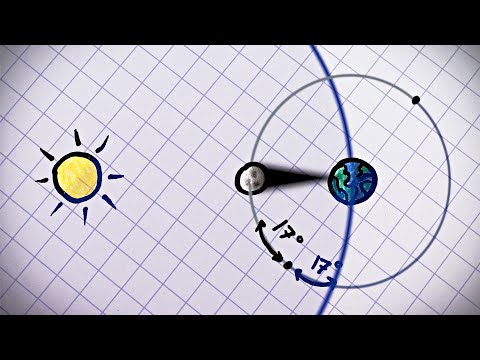
- The moon orbits the earth once per month, which means the moon is on the sun's side of the earth every month.
The moon orbits the earth once per month, which means the moon is on the sun's side of the earth every month.
- The Moon orbits the Earth once per month, which means the Moon is on the Sun's side of the Earth every month.
The Moon orbits the Earth once per month, which means the Moon is on the Sun's side of the Earth every month.
What Happens if the Moon Crashes into Earth?
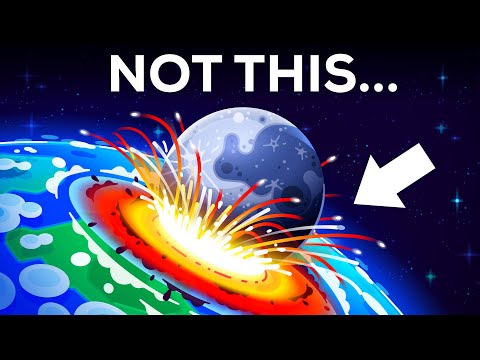
- You see orbits every day: when you throw a ball it makes a tiny little orbit.
You see orbits every day: when you throw a ball it makes a tiny little orbit.
- You see orbits every day; when you throw a ball, it makes a tiny little orbit.
You see orbits every day; when you throw a ball, it makes a tiny little orbit.
Why general relativity would’ve been discovered without Einstein | Sean Carroll
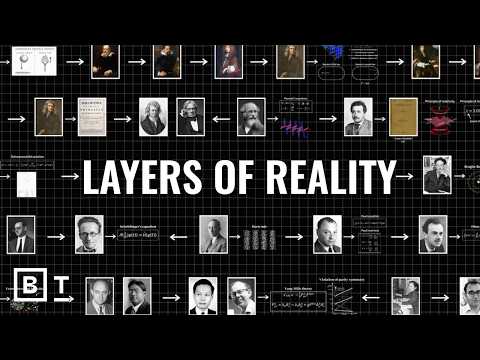
- Niels Bohr says, "I can explain the different sizes of the orbits of the electrons in the atoms." Louis de Broglie says, "It's even better if you imagine that those electrons are waves rather than particles." Werner Heisenberg says, "I can invent a theory using matrices that explains exactly what's going on." Max Born and Pascal Jordan say, "We can improve the mathematics of Heisenberg's theory to make it more general." Erwin Schrödinger comes along and says, "We can replace the matrices by waves." And then Max Born comes again and says, "Actually, these are useful for predicting probabilities." Wolfgang Pauli says there's something called spin,
Niels Bohr says, "I can explain the different sizes of the orbits of the electrons in the atoms." Louis de Broglie says, "It's even better if you imagine that those electrons are waves rather than particles." Werner Heisenberg says, "I can invent a theory using matrices that explains exactly what's going on." Max Born and Pascal Jordan say, "We can improve the mathematics of Heisenberg's theory to make it more general." Erwin Schrödinger comes along and says, "We can replace the matrices by waves." And then Max Born comes again and says, "Actually, these are useful for predicting probabilities." Wolfgang Pauli says there's something called spin,
- Niels Bohr says, I can explain the different sizes of the orbits of the electrons in the atoms.
Niels Bohr says, I can explain the different sizes of the orbits of the electrons in the atoms.
What If You Fall into a Black Hole?
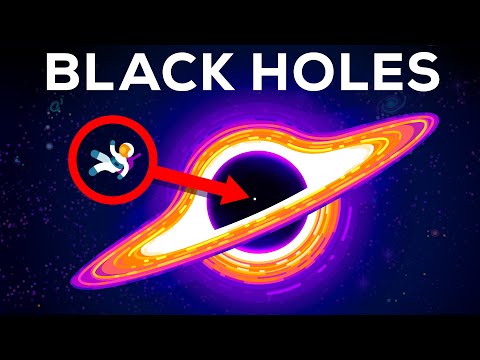
- orbiting outside the event horizon. This matter can become incredibly hot as close orbits
orbiting outside the event horizon. This matter can become incredibly hot as close orbits
- This matter can become incredibly hot, as close orbits can speed this matter up to half the speed of light, and
This matter can become incredibly hot, as close orbits can speed this matter up to half the speed of light, and
ScienceCasts: Bright Explosion on the Moon

- These fireballs were traveling along nearly identical orbits between Earth and the asteroid belt.
These fireballs were traveling along nearly identical orbits between Earth and the asteroid belt.
- 'These fireballs were traveling along nearly identical orbits
'These fireballs were traveling along nearly identical orbits
What Is a Leap Year?

- So while the Earth orbits around the Sun in a full year, it spins around 365.25 times.
So while the Earth orbits around the Sun in a full year, it spins around 365.25 times.
- orbits around the sun in a full year
orbits around the sun in a full year
The Moon's Orbit is WEIRD
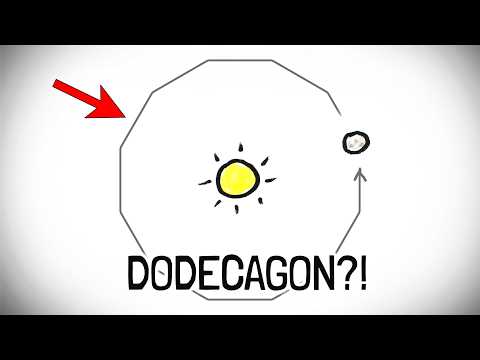
- We think of the moon as orbiting the earth, following a spiraling trajectory as the earth itself orbits the sun.
We think of the moon as orbiting the earth, following a spiraling trajectory as the earth itself orbits the sun.
- We think of the Moon as orbiting the Earth, following a spiraling trajectory as the Earth itself orbits the Sun.
We think of the Moon as orbiting the Earth, following a spiraling trajectory as the Earth itself orbits the Sun.