marsupial
US /mɑrˈsupiəl/
・UK /mɑ:ˈsu:piəl/
C2
n.NounMammal where females carry their young in a pouch
A newborn marsupial needs to live attached to its mother's belly
Video subtitles
Koala Facts | Wild Animals - Planet Doc Full Documentaries

- The young koalas suckle in the marsupial bag until they are six months old.
The young koalas suckle in the marsupial bag until they are six months old.
- The young koalas suckle in the marsupial bag until they are 6 months old.
The young koalas suckle in the marsupial bag until they are 6 months old.
Kangaroos Can Jump 30 Feet High
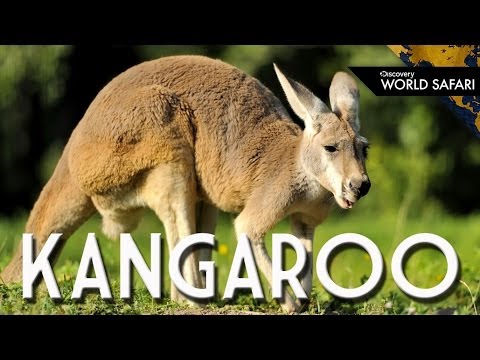
- Kangaroos are classified as marsupials and are in fact the largest of all the marsupial species, standing over 6 feet tall.
Kangaroos are classified as marsupials and are in fact the largest of all the marsupial species, standing over 6 feet tall.
- And are in fact the largest of all the marsupial species,
And are in fact the largest of all the marsupial species,
DON'T WAKE the WOMBAT?!

- Today I will be getting to know one of their permanent residents, a unique marsupial known as Wanda, the wombat.
Today I will be getting to know one of their permanent residents, a unique marsupial known as Wanda, the wombat.
- but this is in fact a marsupial.
but this is in fact a marsupial.
12 Most Popular Marsupial Animals in Australia
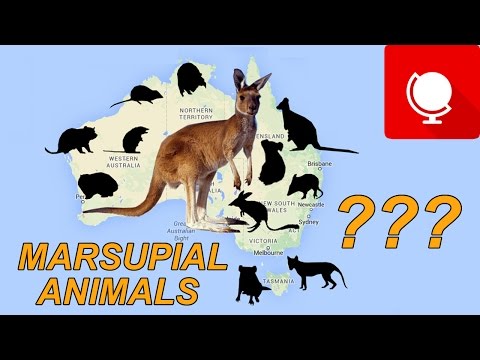
- Bandicoots are small to medium sized nocturnal omnivorous marsupial mammals
Bandicoots are small to medium sized nocturnal omnivorous marsupial mammals
- Bandicoots are small to medium-sized nocturnal omnivorous marsupial mammals with pointy snouts and large hind feet.
Bandicoots are small to medium-sized nocturnal omnivorous marsupial mammals with pointy snouts and large hind feet.
Do You Know ANIMALS? The Ultimate Quiz!

- Which of the following animals is not a marsupial?
Which of the following animals is not a marsupial?
- Which of the following animals is not a marsupial?
Which of the following animals is not a marsupial?
Could A.I. become part of your school's curriculum? | January 30, 2026

- Our Angus Watson has more on how Australian farmers helped rescue this marooned marsupial from a forest fire.
Our Angus Watson has more on how Australian farmers helped rescue this marooned marsupial from a forest fire.
- Our Angus Watson has more on how Australian farmers helped rescue this marooned marsupial from a forest fire.
Our Angus Watson has more on how Australian farmers helped rescue this marooned marsupial from a forest fire.
Ecosystem Change
- time. Example could be in the mammals or the marsupial mammals. So basically there are
time. Example could be in the mammals or the marsupial mammals. So basically there are
- You have the marsupial mammals. Example would be like the kangaroo. And then you have the
You have the marsupial mammals. Example would be like the kangaroo. And then you have the
What's Hidden Under the Jungles of New Guinea?

- Another notable recent example of a major discovery of a large animal like this in New guinea is the Wonduoi Tree kangaroo, a large 20 pound tree dwelling kangaroo like marsupial that was discovered on the island in the 1930s but was then never seen again for decades and eventually classified as extinct, only to suddenly become spotted again by a researcher in 2018 who captured the first ever photograph of one alive and well in the wild.
Another notable recent example of a major discovery of a large animal like this in New guinea is the Wonduoi Tree kangaroo, a large 20 pound tree dwelling kangaroo like marsupial that was discovered on the island in the 1930s but was then never seen again for decades and eventually classified as extinct, only to suddenly become spotted again by a researcher in 2018 who captured the first ever photograph of one alive and well in the wild.
- Another notable recent example of a major discovery of a large animal like this in New Guinea is the Wandawoi tree kangaroo, a large, 20-pound, tree-dwelling kangaroo-like marsupial that was discovered on the island in the 1930s.
Another notable recent example of a major discovery of a large animal like this in New Guinea is the Wandawoi tree kangaroo, a large, 20-pound, tree-dwelling kangaroo-like marsupial that was discovered on the island in the 1930s.
The Origin Of Memorial Day | May 28, 2021

- Quick: Name the world's largest carnivorous marsupial.
Quick: Name the world's largest carnivorous marsupial.
- Quick, name the world's largest carnivorous marsupial.
Quick, name the world's largest carnivorous marsupial.
What If All Insects Disappeared?
- But while the dung beetles back in Britain would eat and break down cow poo, the native Australian beetles wouldn't touch the stuff because they evolved to munch only on dry, fibrous marsupial dung.
But while the dung beetles back in Britain would eat and break down cow poo, the native Australian beetles wouldn't touch the stuff because they evolved to munch only on dry, fibrous marsupial dung.