examine
US /ɪɡˈzæmɪn/
・UK /ɪgˈzæmɪn/
A2
v.t.Transitive Verb(Medical) to test to find out what is wrong
The doctor had to examine Jim's stomach
v.t.Transitive VerbTo test your knowledge or ability
The teacher will examine your English writing ability
v.t.Transitive VerbTo ask questions; to look closely at something
Did you spend enough time to examine the proposal well?
v.t.Transitive VerbTo question (someone) formally in a court of law or other official context.
The lawyer will examine the witness.
Video subtitles
The rise of realistic fake designer bags

- - So we're just gonna dive right into this 'cause you brought along two samples for us to basically examine. - Thank you for having me.
- So we're just gonna dive right into this 'cause you brought along two samples for us to basically examine. - Thank you for having me.
- Gonna dive right into this 'cause you brought along two samples for us to basically examine.
Gonna dive right into this 'cause you brought along two samples for us to basically examine.
Why Aldi Is America’s Fastest Growing Grocery Store | WSJ The Economics Of

- -When Aldi comes in, it prompts other retailers to look at their prices again and kind of, you know, surgically examine how to adjust what they sell and for how much.
-When Aldi comes in, it prompts other retailers to look at their prices again and kind of, you know, surgically examine how to adjust what they sell and for how much.
- When Aldi comes in, it prompts other retailers to look at their prices again and kind of surgically examine how to adjust what they sell and for how much.
When Aldi comes in, it prompts other retailers to look at their prices again and kind of surgically examine how to adjust what they sell and for how much.
Trion ICP / RIE Dry Etch - Standard Operating Procedures
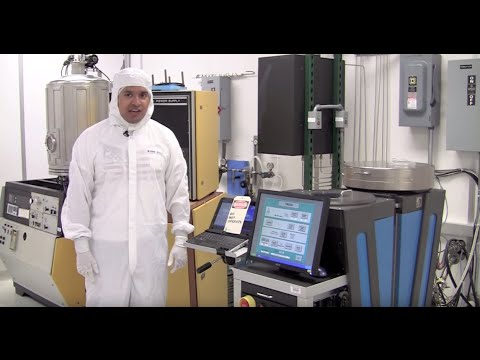
- Over here we also like you to examine the oil level.
Over here we also like you to examine the oil level.
- Over here, we also like to examine the oil level.
Over here, we also like to examine the oil level.
Neuroplasticity Explained: How to Rewire Your Brain for Mental Strength

- Regularly take time to examine your thoughts and reactions.
Regularly take time to examine your thoughts and reactions.
- Regularly take time to examine your thoughts and reactions.
Regularly take time to examine your thoughts and reactions.
The Story of: Gerhard Richter (1932–Today)

- Realism, and with reference to Socialist Realism, but also a label Richter wasn't too satisfied about. Richter was interested in current affairs, consumer society, new media and popular culture. He incorporated these elements into his painterly practice, depicting for instance televisions, design magazines, advertisements or political figures and events. This was the genesis of Richter's professional oeuvre, and photography was the starting point, something which used to be impossible with his academic background. He combined photography with his characteristic blurred effect, and immediately started to examine the relationship between both media, photography and painting, a true pillar within his artistic practice. The German artist was interested and fascinated by the dialectic relation between the objectivity and the subjectivity when painting photographs. For Richter, the photograph was the most perfect picture. He could eliminate conscious thinking, as the picture does not change, it is absolute, autonomous, unconditional and not linked to any style. With his blurred effect, he made everything equal, equally important and simultaneously equally unimportant. He was strongly drawn to depicting certain subjects from found photographic material. Think of military subjects, family portraits, images from newspapers or magazines. These selected images all have their very own narrative and motive to be painted, most often combining death or suffering, and its exploitation of death and suffering in media. From 1963 until 1964, Richter had his first exhibitions and commercial successes, collaborating with several galleries, and also collectors were starting to get really interested in his work and career. A landmark year for Gerhard Richter was 1966, for many reasons. The first, the birth of his daughter, Betty, whom he iconically painted in 1988. He also painted his wife
Realism, and with reference to Socialist Realism, but also a label Richter wasn't too satisfied about. Richter was interested in current affairs, consumer society, new media and popular culture. He incorporated these elements into his painterly practice, depicting for instance televisions, design magazines, advertisements or political figures and events. This was the genesis of Richter's professional oeuvre, and photography was the starting point, something which used to be impossible with his academic background. He combined photography with his characteristic blurred effect, and immediately started to examine the relationship between both media, photography and painting, a true pillar within his artistic practice. The German artist was interested and fascinated by the dialectic relation between the objectivity and the subjectivity when painting photographs. For Richter, the photograph was the most perfect picture. He could eliminate conscious thinking, as the picture does not change, it is absolute, autonomous, unconditional and not linked to any style. With his blurred effect, he made everything equal, equally important and simultaneously equally unimportant. He was strongly drawn to depicting certain subjects from found photographic material. Think of military subjects, family portraits, images from newspapers or magazines. These selected images all have their very own narrative and motive to be painted, most often combining death or suffering, and its exploitation of death and suffering in media. From 1963 until 1964, Richter had his first exhibitions and commercial successes, collaborating with several galleries, and also collectors were starting to get really interested in his work and career. A landmark year for Gerhard Richter was 1966, for many reasons. The first, the birth of his daughter, Betty, whom he iconically painted in 1988. He also painted his wife
- These experiments brought him to his formalum or in-paintings, in which he continued to examine the relation between representation and abstraction. What started as a representational painting was being reworked in such a manner, the imagery was entirely obliterated, using gestural brushstrokes and thick impastos. Uniquely, Richter made these gestural brushstrokes without being expressive, pulling the paint across the canvas in an emotionless manner, involving expression as an impelling force of painting. Doing so, Richter emphasised the painterly gesture, a witness of Richter's engagement towards the abstract as a counter-model of the figurative, coming to terms with the new possibilities for painting offered by abstraction and minimalism. Furthermore, from a personal perspective, the 1970s were not the happiest of years for Gerhard Richter, as his marriage with Emma was gradually coming to an end, and he lost his very dear friend Blinke Palermo unexpectedly in 1976. As a result, his grey paintings, but also his figurative works, think of his seascapes in particular, are embedded with a deep melancholy.
These experiments brought him to his formalum or in-paintings, in which he continued to examine the relation between representation and abstraction. What started as a representational painting was being reworked in such a manner, the imagery was entirely obliterated, using gestural brushstrokes and thick impastos. Uniquely, Richter made these gestural brushstrokes without being expressive, pulling the paint across the canvas in an emotionless manner, involving expression as an impelling force of painting. Doing so, Richter emphasised the painterly gesture, a witness of Richter's engagement towards the abstract as a counter-model of the figurative, coming to terms with the new possibilities for painting offered by abstraction and minimalism. Furthermore, from a personal perspective, the 1970s were not the happiest of years for Gerhard Richter, as his marriage with Emma was gradually coming to an end, and he lost his very dear friend Blinke Palermo unexpectedly in 1976. As a result, his grey paintings, but also his figurative works, think of his seascapes in particular, are embedded with a deep melancholy.
A Different Side of Taipei & Northern Taiwan: Street Food & Tea Farm ??

- Where everyone can examine your.
Where everyone can examine your.
- Where everyone can examine your—form.
Where everyone can examine your—form.
How To Speak: INDIAN Accent #4

- what is up guys welcome back to my channel I hope you are having a great week this video is how to speak in the Indian accent part four a lot of you guys have been waiting for this video initially I was just going to do the one Indian accent the main one that I made a few months ago and but I decided to do part 2 part 3 part 4 because you guys have been requesting it so I thought why not let's make some more to help you guys out I actually got a video suggestion from Zhang Zhang and this was to read a paragraph out in the Indian accent and by doing so um you guys can learn how to pronounce different words in the Indian accent in a different fun way so what I'm going to do is I'm going to put the paragraph that I'm going to read on the screen and I want you to pause the video and think about how you would pronounce the words yourself and then we will proceed with the video with me speaking in the Indian accent this paragraph that I'm going to read is from one of my favorite books it is Harry Potter and the Order of the Phoenix okay this book is one of my favorite books but let's just open up to a random page okay you it is best to know what the enemy is saying said Hermione darkly as she unfurled the newspaper and disappeared behind it not emerging until Harry and Ron finished eating nothing she said simply rolling up the newspaper and laying it down by her plate nothing about you or Dumbledore or anything Professor McGonagall was now moving along the table handing out timetables look at today grown-brown history of magic double potions divination and double defense against the dark arts Vince Snape Trelawney and that Umbridge woman all in one day I wish Fred and Joe did hurry up and get those skiving snack boxes sorted so let me read that paragraph in the British accent for you it is best to know what the enemy is saying said Hermione darkly as she unfurled the newspaper and disappeared behind it not emerging until Harry and Ron had finished eating nothing she said simply rolling up the newspaper and laying it down by her plate nothing about you or Dumbledore or anything Professor McGonagall was now moving along the table handing out timetables look at today grown-brown history of magic double potions divination and double defense against the dark arts Vince Snape Trelawney and that Umbridge woman all in one day I wish Fred and Joe did hurry up and get those skiving snack boxes sorted okay so let's examine some of these words here in more detail so one of the words I want to just want to kind of like talk about in more detail is timetable and the Indian accent will be timetable so the word the sounds that you want to look out for in this word is the T in the timetable so obviously it's not T it's a T sound so time not time time and table table and the L sound if you remember I talked about in my first video nothing so in the British accent will be nothing nothing but in the Indian accent will be nothing hmm ground you've got the R sound in ground the rolling R so ground and run ground run and the OA sound here is or groaned not groaned is how you would say in the British accent but the OA here makes it or sound so groaned divination so notice out for the D sound in divination it's not divination it's divination divination D D D so you're basically rolling your tongue when you're saying the D sound so replay this video so you can use this video to practice your Indian accent so that was just a little quick video just to help you guys out and thank you again Zheng Cheng for recommending this idea to me and I hope it helps you guys out oh yeah and I just realized looking at this it's the 20th anniversary of Harry Potter so that worked out quite nicely reading reading a paragraph from the fifth book Order of the Phoenix that was my little tribute to J.C.
what is up guys welcome back to my channel I hope you are having a great week this video is how to speak in the Indian accent part four a lot of you guys have been waiting for this video initially I was just going to do the one Indian accent the main one that I made a few months ago and but I decided to do part 2 part 3 part 4 because you guys have been requesting it so I thought why not let's make some more to help you guys out I actually got a video suggestion from Zhang Zhang and this was to read a paragraph out in the Indian accent and by doing so um you guys can learn how to pronounce different words in the Indian accent in a different fun way so what I'm going to do is I'm going to put the paragraph that I'm going to read on the screen and I want you to pause the video and think about how you would pronounce the words yourself and then we will proceed with the video with me speaking in the Indian accent this paragraph that I'm going to read is from one of my favorite books it is Harry Potter and the Order of the Phoenix okay this book is one of my favorite books but let's just open up to a random page okay you it is best to know what the enemy is saying said Hermione darkly as she unfurled the newspaper and disappeared behind it not emerging until Harry and Ron finished eating nothing she said simply rolling up the newspaper and laying it down by her plate nothing about you or Dumbledore or anything Professor McGonagall was now moving along the table handing out timetables look at today grown-brown history of magic double potions divination and double defense against the dark arts Vince Snape Trelawney and that Umbridge woman all in one day I wish Fred and Joe did hurry up and get those skiving snack boxes sorted so let me read that paragraph in the British accent for you it is best to know what the enemy is saying said Hermione darkly as she unfurled the newspaper and disappeared behind it not emerging until Harry and Ron had finished eating nothing she said simply rolling up the newspaper and laying it down by her plate nothing about you or Dumbledore or anything Professor McGonagall was now moving along the table handing out timetables look at today grown-brown history of magic double potions divination and double defense against the dark arts Vince Snape Trelawney and that Umbridge woman all in one day I wish Fred and Joe did hurry up and get those skiving snack boxes sorted okay so let's examine some of these words here in more detail so one of the words I want to just want to kind of like talk about in more detail is timetable and the Indian accent will be timetable so the word the sounds that you want to look out for in this word is the T in the timetable so obviously it's not T it's a T sound so time not time time and table table and the L sound if you remember I talked about in my first video nothing so in the British accent will be nothing nothing but in the Indian accent will be nothing hmm ground you've got the R sound in ground the rolling R so ground and run ground run and the OA sound here is or groaned not groaned is how you would say in the British accent but the OA here makes it or sound so groaned divination so notice out for the D sound in divination it's not divination it's divination divination D D D so you're basically rolling your tongue when you're saying the D sound so replay this video so you can use this video to practice your Indian accent so that was just a little quick video just to help you guys out and thank you again Zheng Cheng for recommending this idea to me and I hope it helps you guys out oh yeah and I just realized looking at this it's the 20th anniversary of Harry Potter so that worked out quite nicely reading reading a paragraph from the fifth book Order of the Phoenix that was my little tribute to J.C.
- So, let's examine some of these words here in more detail.
So, let's examine some of these words here in more detail.
What Happens When You Quit Salt?

- While these early studies have been done on mice, further research aims to look directly at stress hormones in humans, and also examine salt's role in anxiety and aggression.
While these early studies have been done on mice, further research aims to look directly at stress hormones in humans, and also examine salt's role in anxiety and aggression.
- While these early studies have been done on mice, further research aims to look directly at stress hormones in humans and also examine salt's role in anxiety and aggression.
While these early studies have been done on mice, further research aims to look directly at stress hormones in humans and also examine salt's role in anxiety and aggression.
for those feeling behind in life

- But the other side of that is I examine my own situation and compare where I was at their age and where I'm at my age and what they've done at their age, what I haven't done.
But the other side of that is I examine my own situation and compare where I was at their age and where I'm at my age and what they've done at their age, what I haven't done.
- But the other side of that is I examine my own situation.
But the other side of that is I examine my own situation.
10 Viral Moments That Changed the World

- However, in the wake of WikiLeaks revelations, governments have had to re-examine what it means to be transparent with their citizens in the age of the internet.
However, in the wake of WikiLeaks revelations, governments have had to re-examine what it means to be transparent with their citizens in the age of the internet.