eject
US /ɪ'dʒekt/
・UK /ɪ'dʒekt/
B2
v.t.Transitive VerbTo make a disc or tape come out of a machine
You must eject the installation disk and put it away
v.t.Transitive VerbTo throw someone out; force someone to leave
They had to eject the football fan because he got into a fight
Video subtitles
POP CULTURE: What Is Cinema For?

- Whereas the worst sort of films eject us back into our lives, full of longing and disenchantment, the best ones leave us ready to re-engage with circumstances with which we'd unfairly grown bored.
Whereas the worst sort of films eject us back into our lives, full of longing and disenchantment, the best ones leave us ready to re-engage with circumstances with which we'd unfairly grown bored.
- Whereas the worst sort of films
eject us back into our lives,
Whereas the worst sort of films eject us back into our lives,
How Wounded People Seek Out further Punishment
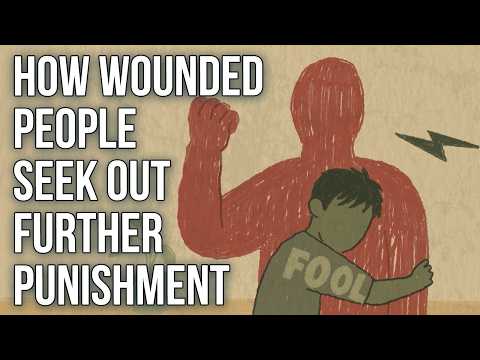
- It's just that for us, home was a place of grief and persecution. It's easy enough to see why children put up with poor treatment. They're born radically powerless. They can't run away. They are utterly at the mercy of others. They can't even think especially straight. What they must do, above all else, is adapt. Which in practice means learning to put up with poor treatment. They have to develop an advanced skill at not noticing quite how awful things are, an expertise at being unfazed by cruelty and neglect. Children in deprived circumstances tend to be geniuses at looking away, disassociating and making light of things. Of course, it might not be perfect that their father screams at them constantly, but there are some interesting shows on television and there's a really fascinating bit of the garden to explore in the morning. You can climb up the big tree and imagine it's a little house. And of course, ideally their mother wouldn't be so mocking and disloyal. But that's just the way things are, neither more or less sad than the fact it's often raining and there's a lot of homework to do. In any case, the bad treatment almost certainly has to do with something that they, the child, have done wrong. Badly treated children tend to take a compulsively generous view of those who injure them. Obviously, they aren't nasty on purpose. That would make no sense. Clearly, their ostensible brutality has sound explanations. It must be because they, the child, is in the wrong. That's why they're being neglected. That's why they've been declared fools. That's why they're being bullied. It's a great deal easier to believe that the parent is tough, yet fundamentally right, rather than gratuitously callous and unjustifiably hostile. In other words, what a bad childhood trains us to do, above all else, is to indulge meanness. The muscle that normally functions to repel attacks has had to be starved and has atrophied. In order to survive, we had to lose the ability to work out what was good and bad for us, lest we discover that we spent 18 years in the company of fiends. What this means for our futures is that we will be extremely poor at discerning when the partners we let into our lives cross the border into selfishness and malevolence. We'll continue under a narcoleptic command not to notice that we're being robbed and deceived. We'll be as blind to the blows now as we were then. For a long time, it simply won't occur to us to wonder why we've ended up paying for everything for the partner, or why they're unreliable in their promises, or constantly prioritise their friends over us, or are angrily defensive whenever we raise a complaint. We will simply, as we had to early on, fall into line and invent elaborate explanations for their behaviour. They're good, but they're tired. They're durable, but under pressure at work. They're fierce, but compensating for their childhood traumas, for which we have a lot of sympathy. Anything other than the more straightforward conclusion, we've fallen in with unconcerned egoists. We shouldn't compound our disloyalty towards ourselves by feeling, on top of everything else, ashamed for our tolerance. It isn't weakness, it's a survival strategy from childhood that served a very sensible purpose then but is liable to be ruining our lives now. To wake ourselves up, we need to consider our choices as if someone else had made them. We might wonder what we would advise a friend to do if they were in our situation. And through such a lens, we might start to perceive that the treatment we're facing isn't, as we've long thought, a sign of our partner's depth or complexity, but in the end, something much more humble, evidence that we need to get away. But this will be only a momentary liberation until we can understand the more fundamental issue, that the muscle most people use to eject poison has withered because of a distinctive history. We need to reverse the direction of our psychological fate. Our early suffering should not condemn us to yet more pain. It is what gives us an especially powerful claim on original sources of kindness, tenderness and calm.
It's just that for us, home was a place of grief and persecution. It's easy enough to see why children put up with poor treatment. They're born radically powerless. They can't run away. They are utterly at the mercy of others. They can't even think especially straight. What they must do, above all else, is adapt. Which in practice means learning to put up with poor treatment. They have to develop an advanced skill at not noticing quite how awful things are, an expertise at being unfazed by cruelty and neglect. Children in deprived circumstances tend to be geniuses at looking away, disassociating and making light of things. Of course, it might not be perfect that their father screams at them constantly, but there are some interesting shows on television and there's a really fascinating bit of the garden to explore in the morning. You can climb up the big tree and imagine it's a little house. And of course, ideally their mother wouldn't be so mocking and disloyal. But that's just the way things are, neither more or less sad than the fact it's often raining and there's a lot of homework to do. In any case, the bad treatment almost certainly has to do with something that they, the child, have done wrong. Badly treated children tend to take a compulsively generous view of those who injure them. Obviously, they aren't nasty on purpose. That would make no sense. Clearly, their ostensible brutality has sound explanations. It must be because they, the child, is in the wrong. That's why they're being neglected. That's why they've been declared fools. That's why they're being bullied. It's a great deal easier to believe that the parent is tough, yet fundamentally right, rather than gratuitously callous and unjustifiably hostile. In other words, what a bad childhood trains us to do, above all else, is to indulge meanness. The muscle that normally functions to repel attacks has had to be starved and has atrophied. In order to survive, we had to lose the ability to work out what was good and bad for us, lest we discover that we spent 18 years in the company of fiends. What this means for our futures is that we will be extremely poor at discerning when the partners we let into our lives cross the border into selfishness and malevolence. We'll continue under a narcoleptic command not to notice that we're being robbed and deceived. We'll be as blind to the blows now as we were then. For a long time, it simply won't occur to us to wonder why we've ended up paying for everything for the partner, or why they're unreliable in their promises, or constantly prioritise their friends over us, or are angrily defensive whenever we raise a complaint. We will simply, as we had to early on, fall into line and invent elaborate explanations for their behaviour. They're good, but they're tired. They're durable, but under pressure at work. They're fierce, but compensating for their childhood traumas, for which we have a lot of sympathy. Anything other than the more straightforward conclusion, we've fallen in with unconcerned egoists. We shouldn't compound our disloyalty towards ourselves by feeling, on top of everything else, ashamed for our tolerance. It isn't weakness, it's a survival strategy from childhood that served a very sensible purpose then but is liable to be ruining our lives now. To wake ourselves up, we need to consider our choices as if someone else had made them. We might wonder what we would advise a friend to do if they were in our situation. And through such a lens, we might start to perceive that the treatment we're facing isn't, as we've long thought, a sign of our partner's depth or complexity, but in the end, something much more humble, evidence that we need to get away. But this will be only a momentary liberation until we can understand the more fundamental issue, that the muscle most people use to eject poison has withered because of a distinctive history. We need to reverse the direction of our psychological fate. Our early suffering should not condemn us to yet more pain. It is what gives us an especially powerful claim on original sources of kindness, tenderness and calm.
- But this will be only a momentary liberation until we can understand the more fundamental issue—that the muscle most people use to eject poison has withered because of a distinctive history.
But this will be only a momentary liberation until we can understand the more fundamental issue—that the muscle most people use to eject poison has withered because of a distinctive history.
Bangladesh Air Force pilot reported a mechanical fault shortly after take-off | DW News

- The pilot managed to get a message out saying he had a malfunction, but he wasn't able to eject or bail out, unlike the earlier crash in 2008, where the pilot in that case managed to eject from the aircraft.
The pilot managed to get a message out saying he had a malfunction, but he wasn't able to eject or bail out, unlike the earlier crash in 2008, where the pilot in that case managed to eject from the aircraft.
- but he wasn't able to eject or bail out, unlike the earlier crash in 2008, where the pilot in that case managed to eject from the aircraft.
but he wasn't able to eject or bail out, unlike the earlier crash in 2008, where the pilot in that case managed to eject from the aircraft.
The Antibiotic Apocalypse Explained

- Or by investing energy in pumps that eject the antibiotics before they can do damage.
Or by investing energy in pumps that eject the antibiotics before they can do damage.
- Or by investing energy in pumps that eject the antibiotics
Or by investing energy in pumps that eject the antibiotics
Pregnancy is Insane

- Pregnancy is a huge energy investment, so the mother's body will eject the embryo if it doesn't see it as viable.
Pregnancy is a huge energy investment, so the mother's body will eject the embryo if it doesn't see it as viable.
- Pregnancy is a huge energy investment, so the mother's body will eject the embryo if it doesn't see it as viable.
Pregnancy is a huge energy investment, so the mother's body will eject the embryo if it doesn't see it as viable.
Build Your Vocabulary FASTER!

- So eject, reject, object or object or object, subject or subject, deject, etc.
So eject, reject, object or object or object, subject or subject, deject, etc.
- So the eject, this is the root, means to push out.
So the eject, this is the root, means to push out.
Second fighter jet crashes into Red Sea after landing failure on USS Harry S. Truman

- One of the officials says the two aviators were able to eject.
One of the officials says the two aviators were able to eject.
- One of the officials says the two aviators were able to eject; there were only minor injuries.
One of the officials says the two aviators were able to eject; there were only minor injuries.
3 Common Mental Health Issues Men Struggle with More Than Women

- Derealization is also something that can happen when your physical and emotional body is having such an intense experience that it's almost like it tries to eject you, like your awareness or your consciousness, out of that moment, right?
Derealization is also something that can happen when your physical and emotional body is having such an intense experience that it's almost like it tries to eject you, like your awareness or your consciousness, out of that moment, right?
- Derealization is also something that can happen when your physical and emotional body is having such an intense experience that it's almost like it tries to eject you, your awareness or your consciousness, out of that moment, right?
Derealization is also something that can happen when your physical and emotional body is having such an intense experience that it's almost like it tries to eject you, your awareness or your consciousness, out of that moment, right?
Time Slime (Bravest Warriors - Ep. 1 Season 1 On Cartoon Hangover)

- Word up, Gayle! We're on our way! Woah, slow down. Don't eject your core, champ.
Word up, Gayle! We're on our way! Woah, slow down. Don't eject your core, champ.
- Don't eject your core, champ.
Don't eject your core, champ.
Submarine Nuclear Power | Engineering behind it Nuclear Reactor How it Works

- Step number 3: high pressure and compressed air is pumped into the tubes and this is used to eject the Tomahawk missiles.
Step number 3: high pressure and compressed air is pumped into the tubes and this is used to eject the Tomahawk missiles.
- High pressure and compressed air is pumped into the tubes and this is used to eject the Tomahawk missiles.
High pressure and compressed air is pumped into the tubes and this is used to eject the Tomahawk missiles.