countenance
US /ˈkaʊntənəns/
・UK /'kaʊntənəns/
C1TOEIC
n.NounExpression of the face
Her countenance is shining with love
Video subtitles
A Christmas Carol by Charles Dickens Full Audiobook with Subtitles and Chapters

- "Thank you." "You will be haunted," resumed the ghost, "by three spirits." Scrooge's countenance fell almost as low as the ghost's had done.
"Thank you." "You will be haunted," resumed the ghost, "by three spirits." Scrooge's countenance fell almost as low as the ghost's had done.
- Scrooge’s countenance fell almost as low as the Ghost’s had done.
Scrooge’s countenance fell almost as low as the Ghost’s had done.
Before You Get Back With Your Ex — Watch THIS

- News that two people who had a harrowing break-up are now trying to get back together again a few months or years down the line tends, among sensible people, to raise at the very least suspicion, if not outright irritation and despair. Why are these two cursed lovers heading back to the old chaos and drama? Isn't this just a fantasy sprung from naivety, loneliness and most probably short-term lust? Shouldn't they keep faith with their original choice, double down on the highs and lows of dating and perhaps each buy a dog? And yet, to deny ex-couples any legitimate chance to revisit their situation also feels excessively punitive and in its way naïve, insisting blindly that people can never change, that psychotherapy and introspection, books and conversations, time and long walks have nothing whatsoever to teach us, is as foolish as to assume that change can come readily and lightly. For every misguided attempt to resume a relationship, there must be a proportion of equally misguided refusals to countenance a new start, born not out of wisdom so much as pre-emptive fear and disbelief that people are, occasionally, able to learn a new thing or two. We need to make progress a tool with which to strip the matter of sentiment and rationally distinguish mature from sentimental plans. What follows is a sequence of questions, amounting to a kind of examination, that exes who are meeting up again after a long break should discuss with one another – and as importantly, with themselves – before coming anywhere near to holding hands, let alone – and here we must be very definitive – going to bed.
News that two people who had a harrowing break-up are now trying to get back together again a few months or years down the line tends, among sensible people, to raise at the very least suspicion, if not outright irritation and despair. Why are these two cursed lovers heading back to the old chaos and drama? Isn't this just a fantasy sprung from naivety, loneliness and most probably short-term lust? Shouldn't they keep faith with their original choice, double down on the highs and lows of dating and perhaps each buy a dog? And yet, to deny ex-couples any legitimate chance to revisit their situation also feels excessively punitive and in its way naïve, insisting blindly that people can never change, that psychotherapy and introspection, books and conversations, time and long walks have nothing whatsoever to teach us, is as foolish as to assume that change can come readily and lightly. For every misguided attempt to resume a relationship, there must be a proportion of equally misguided refusals to countenance a new start, born not out of wisdom so much as pre-emptive fear and disbelief that people are, occasionally, able to learn a new thing or two. We need to make progress a tool with which to strip the matter of sentiment and rationally distinguish mature from sentimental plans. What follows is a sequence of questions, amounting to a kind of examination, that exes who are meeting up again after a long break should discuss with one another – and as importantly, with themselves – before coming anywhere near to holding hands, let alone – and here we must be very definitive – going to bed.
- For every misguided attempt to resume a relationship, there must be a proportion of equally misguided refusals to countenance a new start—born not out of wisdom so much as preemptive fear and disbelief that people are, occasionally, able to learn a new thing or two.
For every misguided attempt to resume a relationship, there must be a proportion of equally misguided refusals to countenance a new start—born not out of wisdom so much as preemptive fear and disbelief that people are, occasionally, able to learn a new thing or two.
Overcoming Negative Thought Patterns to Find Joy

- We intimate a possibility of joy on a vastly different scale to that which we ordinarily countenance.
We intimate a possibility of joy on a vastly different scale to that which we ordinarily countenance.
- We intimate a possibility of joy on a vastly different scale to that which we ordinarily countenance.
We intimate a possibility of joy on a vastly different scale to that which we ordinarily countenance.
A Christmas Carol by Charles Dickens Audiobook with subtitles and a warm fire. Read by Greg Wagland.

- "Thank you." "You will be haunted," resumed the ghost, "by three spirits." Scrooge's countenance fell almost as low as the ghost's had done.
"Thank you." "You will be haunted," resumed the ghost, "by three spirits." Scrooge's countenance fell almost as low as the ghost's had done.
- Scrooge's countenance fell almost as low as the Ghost's had done.
Scrooge's countenance fell almost as low as the Ghost's had done.
Strange Case of Dr Jekyll and Mr Hyde by Robert Louis Stevenson | Full Audiobook

- a rugged countenance that was never lighted by a smile; cold, scanty and embarrassed in discourse;
a rugged countenance that was never lighted by a smile; cold, scanty and embarrassed in discourse;
- Utterson, the lawyer, was a man of a rugged countenance that was never lighted by a smile;
Utterson, the lawyer, was a man of a rugged countenance that was never lighted by a smile;
Chapter 35 - Pride and Prejudice by Jane Austen
- But I shall not scruple to assert that the serenity of your sister's countenance and air was such as might have given the most acute observer a conviction that, however amiable her temper, her heart was not likely to be easily touched.
But I shall not scruple to assert that the serenity of your sister's countenance and air was such as might have given the most acute observer a conviction that, however amiable her temper, her heart was not likely to be easily touched.
- But I shall not scruple to assert, that the serenity of your sister's countenance and
But I shall not scruple to assert, that the serenity of your sister's countenance and
Part 1 - Pride and Prejudice Audiobook by Jane Austen (Chs 01-15)
- He had a pleasant countenance, and easy, unaffected manners.
He had a pleasant countenance, and easy, unaffected manners.
- not all his large estate in Derbyshire could then save him from having a most forbidding, disagreeable countenance,
not all his large estate in Derbyshire could then save him from having a most forbidding, disagreeable countenance,
Boethius’s Consolation of Philosophy
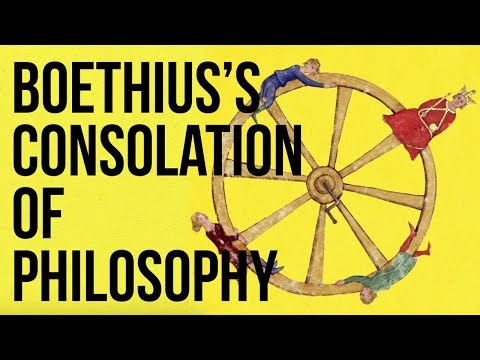
- I was pondering thus in silence and using my pen to set down so tearful a complaint, there appeared standing over my head a woman's form, whose countenance was full of majesty, whose eyes shone as with fire and whose power of insight surpassed that of all men. His visitor is a metaphorical figure whom Boethius terms Lady Philosophy. Lady Philosophy is carrying a pile of classical books in one hand and a sceptre in the other and she has come to visit Boethius in his cell in order to remind him of some of the fundamental truths of his favourite subject, largely as defined by the Stoic school of Greece and Rome. That she should have dropped in on him was, in a sense, no surprise. In the classical world, philosophy was not an abstract academic discipline. It was a set of tools specifically designed to help one live and die well, with particular relevance at the darkest moments. Lady Philosophy begins by gently chiding Boethius for flaring up against his fate. She reminds him, as Stoic philosophers had constantly stressed, that human beings are not in control of most of what happens to them. Our destiny is in large measure in the hands of a devilishly powerful, seductive goddess whom the Romans knew as Fortuna, the goddess of fortune. This figure was a central deity in the Roman pantheon and was represented across the Roman world on coins and statues. She was typically depicted holding a cornucopia in one hand, overflowing with fruit and luxuries, and on the other leaning on a tiller, a marker of her capacity to direct people's fates. Depending on her mood, fortune might either shower us with gifts or, with a blithe smile, steer us towards catastrophe. To be a philosopher means to understand all that fortune controls, to resist her blandishments, to know never to put complete faith in the things that are, ultimately, always in the hands of an immoral and reckless force, and to prepare for the day when we may have to surrender her gifts at a stroke.
I was pondering thus in silence and using my pen to set down so tearful a complaint, there appeared standing over my head a woman's form, whose countenance was full of majesty, whose eyes shone as with fire and whose power of insight surpassed that of all men. His visitor is a metaphorical figure whom Boethius terms Lady Philosophy. Lady Philosophy is carrying a pile of classical books in one hand and a sceptre in the other and she has come to visit Boethius in his cell in order to remind him of some of the fundamental truths of his favourite subject, largely as defined by the Stoic school of Greece and Rome. That she should have dropped in on him was, in a sense, no surprise. In the classical world, philosophy was not an abstract academic discipline. It was a set of tools specifically designed to help one live and die well, with particular relevance at the darkest moments. Lady Philosophy begins by gently chiding Boethius for flaring up against his fate. She reminds him, as Stoic philosophers had constantly stressed, that human beings are not in control of most of what happens to them. Our destiny is in large measure in the hands of a devilishly powerful, seductive goddess whom the Romans knew as Fortuna, the goddess of fortune. This figure was a central deity in the Roman pantheon and was represented across the Roman world on coins and statues. She was typically depicted holding a cornucopia in one hand, overflowing with fruit and luxuries, and on the other leaning on a tiller, a marker of her capacity to direct people's fates. Depending on her mood, fortune might either shower us with gifts or, with a blithe smile, steer us towards catastrophe. To be a philosopher means to understand all that fortune controls, to resist her blandishments, to know never to put complete faith in the things that are, ultimately, always in the hands of an immoral and reckless force, and to prepare for the day when we may have to surrender her gifts at a stroke.
- "While I was pondering thus in silence and using my pen to set down so tearful a complaint, there appeared standing over my head a woman's form, whose countenance was full of majesty, whose eyes shone as with fire,
"While I was pondering thus in silence and using my pen to set down so tearful a complaint, there appeared standing over my head a woman's form, whose countenance was full of majesty, whose eyes shone as with fire,
HOLY BIBLE: BOOK OF REVELATION - FULL Audio Book by Apostle John | KJV | Armageddon & Apocolypse

- and his countenance was as the sun shineth in his strength.
and his countenance was as the sun shineth in his strength.
- went a sharp twoedged sword: and his countenance was as the
went a sharp twoedged sword: and his countenance was as the
500 Most Common English Words | British Vocabulary and Pronunciation | Part 17

- Audacious audacious Augment augment Bayonet bayonet beehive beehive Beseech beseech beseech besiege Bile bile Blemish blemish blunder blunder Boisterous boisterous bow bow Brazen brazen brevity brevity bristle bristle brittle, brittle broth broth Buck buck Beach coma beach coma Bulging, bulging callus callous caprice caprice caraway caraway cloister cloister Coexist coexist Confound confound Countenance countenance Covetous covetous cower cower crag crag crevice Crevice.
Audacious audacious Augment augment Bayonet bayonet beehive beehive Beseech beseech beseech besiege Bile bile Blemish blemish blunder blunder Boisterous boisterous bow bow Brazen brazen brevity brevity bristle bristle brittle, brittle broth broth Buck buck Beach coma beach coma Bulging, bulging callus callous caprice caprice caraway caraway cloister cloister Coexist coexist Confound confound Countenance countenance Covetous covetous cower cower crag crag crevice Crevice.
- Countenance.
Countenance.