Search words & phrases
contralateral
US
・UK
A1
adj.AdjectiveOn or relating to the opposite side (of the body)
Video subtitles
Chapter 16 - Core Training Concepts
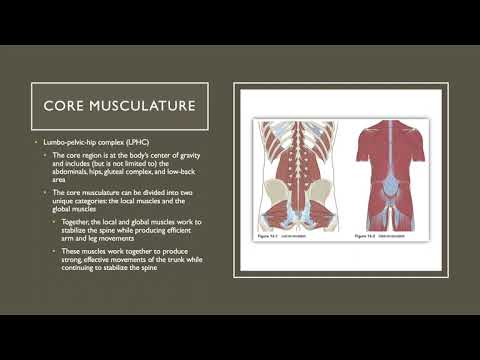
- External obliques, you know, the ones that are more pronounced on your lateral sides of your abdominal region, spinal flexion, lateral flexion, and then contralateral rotation.
External obliques, you know, the ones that are more pronounced on your lateral sides of your abdominal region, spinal flexion, lateral flexion, and then contralateral rotation.
- Now, contralateral rotation, meaning that if you want to rotate, so if you were standing up straight and wanted to just rotate yourself to the right while leaving your hips and legs fixed, what would happen is the external obliques work contralaterally, they work opposite.
Now, contralateral rotation, meaning that if you want to rotate, so if you were standing up straight and wanted to just rotate yourself to the right while leaving your hips and legs fixed, what would happen is the external obliques work contralaterally, they work opposite.
肋骨骨折會自己好嗎?急診醫生回答「創傷問題」:有些傷口縫線是動物腸子做的! ER Doctor Answers Injury Questions|名人專業問答|GQ Taiwan

- First of all, you'll know if you have a dislocation or a fracture because it'll be one of the most painful things that you've ever experienced in your life, and these are things that need to be seen by doctors, so don't try to diagnose yourself at home using Dr. Google and try to pop things back in place, but I will say in the emergency department, before I get x-rays, if somebody thinks that there's a shoulder dislocation, I will have them take the arm that's affected and try to touch the other shoulder, so if somebody has a shoulder dislocation, they're not gonna be able to do it, so that's one of the things I do after I pop a shoulder back in place, which is awesomely satisfying I must say, we check to see if it's back in place before x-rays by seeing if that arm goes up to the contralateral shoulder that is the opposite shoulder.
First of all, you'll know if you have a dislocation or a fracture because it'll be one of the most painful things that you've ever experienced in your life, and these are things that need to be seen by doctors, so don't try to diagnose yourself at home using Dr. Google and try to pop things back in place, but I will say in the emergency department, before I get x-rays, if somebody thinks that there's a shoulder dislocation, I will have them take the arm that's affected and try to touch the other shoulder, so if somebody has a shoulder dislocation, they're not gonna be able to do it, so that's one of the things I do after I pop a shoulder back in place, which is awesomely satisfying I must say, we check to see if it's back in place before x-rays by seeing if that arm goes up to the contralateral shoulder that is the opposite shoulder.