consonants
US
・UK
C1
n. pl.Noun (plural)A speech sound or letter that is not a vowel
Their consonance was surprising because they argue about everything else
Video subtitles
How to pronounce ‘A’ in English (It's not that easy!)

- You can just do a single A between two consonants, especially if they end in a double consonant.
You can just do a single A between two consonants, especially if they end in a double consonant.
- You can just do a single "a" between two consonants, especially if they end in a double consonant.
You can just do a single "a" between two consonants, especially if they end in a double consonant.
Consonant Sound / j / as in "yes" – American English Pronunciation

- The "-y belongs to the category of consonants that are called the glides.
The "-y belongs to the category of consonants that are called the glides.
- The "yh" belongs to the category of consonants that are called the glides.
The "yh" belongs to the category of consonants that are called the glides.
Learn English: How to understand native speakers
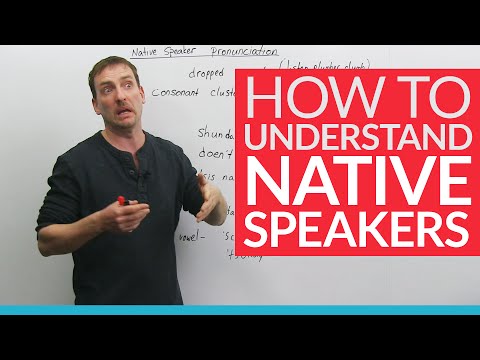
- All the other letters, consonants.
All the other letters, consonants.
- So when we have consonant clusters, these are groups when you have consonants
So when we have consonant clusters, these are groups when you have consonants
Learn to Pronounce the Short i Sound /ɪ/ - American English Ultimate Pronunciation Master Class
- The most common pattern is going to be that consonant-vowel-consonant pattern with the letter "i" in the word "sit." So an "i" when it's between two consonants will be short, like in "sit." This is an exception: this "e-e" in "been." In American English we pronounce this word the "e-e-n" been.
The most common pattern is going to be that consonant-vowel-consonant pattern with the letter "i" in the word "sit." So an "i" when it's between two consonants will be short, like in "sit." This is an exception: this "e-e" in "been." In American English we pronounce this word the "e-e-n" been.
- So an I when it's between two consonants will be short like in sit.
So an I when it's between two consonants will be short like in sit.
American INTONATION - What They don't Teach You in School | The Secrets of Native Speakers
- the words and to reduce them I have to
say the consonants softer - okay? It's
the words and to reduce them I have to say the consonants softer - okay? It's
- To be able to connect the words and to reduce them, I have to say the consonants softer, too.
To be able to connect the words and to reduce them, I have to say the consonants softer, too.
Real English Conversation – Study Idioms and Reductions

- This is because we often drop the T when it comes between two other consonants.
This is because we often drop the T when it comes between two other consonants.
- Because it came between two other consonants.
Because it came between two other consonants.
Does language shape how we think? Linguistic relativity & linguistic determinism -- Linguistics 101

- When we talk about language, we often dig down to universal categories like nouns and verbs, consonants and vowels, phrases and sentences.
When we talk about language, we often dig down to universal categories like nouns and verbs, consonants and vowels, phrases and sentences.
- nouns and verbs, consonants and vowels, phrases and sentences.
nouns and verbs, consonants and vowels, phrases and sentences.
Accent | How to MASTER Speaking English in an American Accent

- That's enough to master nine micro-skills of the American accent, covering all topics like vowels, consonants, rhythm, stress, melody, linking, and
That's enough to master nine micro-skills of the American accent, covering all topics like vowels, consonants, rhythm, stress, melody, linking, and
- That's enough to master nine micro skills of the American accent, covering all topics like vowels, consonants, rhythm, stress, melody, linking, and placement.
That's enough to master nine micro skills of the American accent, covering all topics like vowels, consonants, rhythm, stress, melody, linking, and placement.
American rhythm practice with a metronome exercise

- A lot of consonants here.
A lot of consonants here.
- Okay, so we start with "Guards check gates." A lot of consonants here.
Okay, so we start with "Guards check gates." A lot of consonants here.
Say it correctly in English! -T, -S, -TS, -NT, -CE Pronunciation
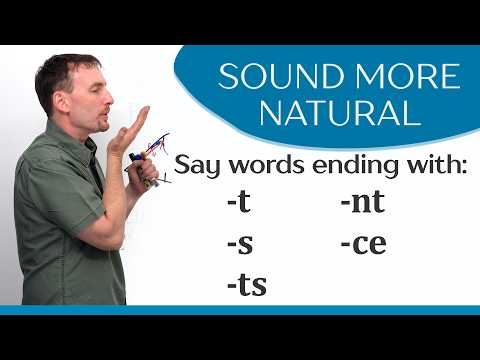
- Both of these consonants are aspirated, meaning that there is an airflow involved in pronouncing them.
Both of these consonants are aspirated, meaning that there is an airflow involved in pronouncing them.
- So, these are called unvoiced consonants, unvoiced sounds, because it's not from the vocal cords, it's just from air flowing through and making a sound as it comes out of your mouth.
So, these are called unvoiced consonants, unvoiced sounds, because it's not from the vocal cords, it's just from air flowing through and making a sound as it comes out of your mouth.