classifier
US /ˈklæsəˌfaɪɚ/
・UK /ˈklæsɪfaɪə(r)/
A1
n.NounA person who creates classifications
n.NounA word or morpheme used in some languages in certain contexts (such as counting) to indicate the semantic class to which the counted item belongs
Video subtitles
But how do AI images and videos actually work? | Guest video by Welch Labs
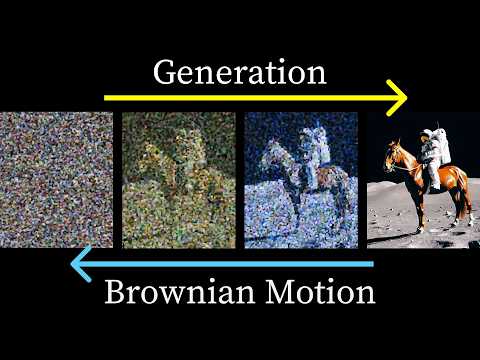
- If we use our new green vectors to guide the diffusion process instead of our original yellow vectors, the difference between our gray arrows that point towards the center of our spiral and yellow vectors that start pointing us back towards our cat part of the This approach is called classifier-free guidance.
If we use our new green vectors to guide the diffusion process instead of our original yellow vectors, the difference between our gray arrows that point towards the center of our spiral and yellow vectors that start pointing us back towards our cat part of the This approach is called classifier-free guidance.
- Classifier-free guidance works remarkably well, and has become an essential part of many modern image and video generation models.
Classifier-free guidance works remarkably well, and has become an essential part of many modern image and video generation models.
How AI Taught Itself to See [DINOv3]
![How AI Taught Itself to See [DINOv3]](https://img.youtube.com/vi/oGTasd3cliM/hqdefault.jpg)
- In this space, building a linear classifier to separate the two groups is very hard.
In this space, building a linear classifier to separate the two groups is very hard.
- In this space, building a linear classifier to separate the two groups is very hard.
In this space, building a linear classifier to separate the two groups is very hard.
OpenAI DevDay 2025: Opening Keynote with Sam Altman

- And then I've added in an if else node to route behavior based on that classifier.
And then I've added in an if else node to route behavior based on that classifier.
- And then I've added in an if-else node to route behavior based on that classifier.
And then I've added in an if-else node to route behavior based on that classifier.
How Recycling Works
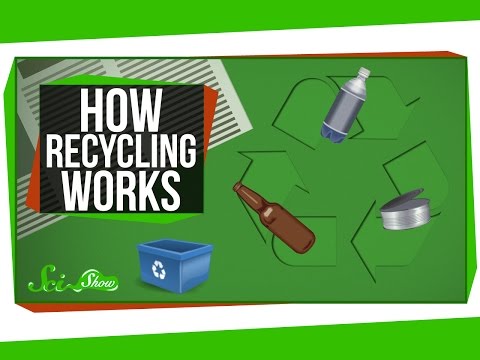
- They're separated using an air classifier, which is a fan that pushes lighter goods, like aluminum and plastic, toward a higher conveyor belt, while allowing glass, which is heavier, to fall down to a lower conveyor belt.
They're separated using an air classifier, which is a fan that pushes lighter goods, like aluminum and plastic, toward a higher conveyor belt, while allowing glass, which is heavier, to fall down to a lower conveyor belt.
- They're separated using an "Air Classifier",
They're separated using an "Air Classifier",
Using Google Colab for Data Science and AI

- Then we're creating a classifier using the scikit-learn.
Then we're creating a classifier using the scikit-learn.
- Here, we're using the gradient boosting classifier.
Here, we're using the gradient boosting classifier.