broadcast
US /ˈbrɔdˌkæst/
・UK /'brɔ:dkɑ:st/
A2TOEIC
v.t.Transitive VerbTo send out signals by radio or television
They will broadcast the event on live television
n. (c./u.)Noun (Countable/Uncountable)Program sent out from a radio or TV station
I heard the new of his death on a radio broadcast
v.t.Transitive VerbTo make widely known.
She broadcast the news to all her friends.
n. (c./u.)Noun (Countable/Uncountable)The transmission of signals over the airwaves.
The new broadcast technology allows for clearer audio.
Video subtitles
Democratic Presidential Debate - June 26 (Full) | NBC News

- DEBATE ON BROADCAST TELEVISION
DEBATE ON BROADCAST TELEVISION
Reef Life of the Andaman (full marine biology documentary)

- This phenomenon of broadcast spawning is not unique to sea cucumbers.
This phenomenon of broadcast spawning is not unique to sea cucumbers.
- This phenomenon of broadcast spawning
This phenomenon of broadcast spawning
English Rewind - 6 Minute English: How quickly can you learn English?

- Hello. The programme you're about to listen to was first broadcast on the BBC Learning English website in October 2014.
Hello. The programme you're about to listen to was first broadcast on the BBC Learning English website in October 2014.
- The program you're about to listen to was first broadcast on the BBC Learning English website in October 2014.
The program you're about to listen to was first broadcast on the BBC Learning English website in October 2014.
Sounds of Japan that 99% Foreigners Can’t Name All

- Well, if you speak any Japanese at all Then maybe this one was rather easy But if you don't speak any at all This one might be kind of hard Well, the sound is actually coming from the Yakiimo roasted sweet potato song Usually played in the winter by a truck vendor Cruising the neighborhood, selling their warm sweet potatoes The Japanese version of the ice cream truck on cold days These Yakiimo trucks actually became popular Since they could move to high traffic areas in the winter Where people wanted warm snacks And this song itself was made in Tokyo Based on the vague idea of the original Yakiimo song There were many variations But before the 60s, when the cassette tape became popular The version became standard For some reason, when I hear this song I kind of feel a little bit cold and also hungry at the same time Number four Let's try this one I'll give you a clue This song is not the Don Quixote song Which everyone already knows I thought that one would be too easy This song is actually from Yodobashi Camera Which plays non-stop And the melody was adapted from the song Battle Hymn of the Republic The founder Terukazu Fujisawa himself wrote the lyrics And since the main store was at Shinjuku West Exit He incorporated the Yamanote train line and Chuo train line in the lyrics So people could know where the store was located For me, it's just as catchy as the Don Quixote song Where they both forever just get stuck in your head At least for the day Number five Let's see if you've heard this one before Three, two, one So this one varies from area to area But it's basically Japan's afternoon go-home song It's played on the loudspeakers throughout the neighborhood Including parks In my Tokyo neighborhood, it plays at 5 p.m. every day Signaling everyone that it's getting late And it's time to make your way home Interestingly, it serves another purpose It's a daily test to ensure the proper working order Of the neighborhood's emergency system Used for major earthquakes or any other major disaster events That need warning Even in the event of a power outage The system can continue to broadcast using its own battery So this is one of those sounds that I recognized early on But didn't know what it was for until much, much later I'm just glad that this sound is actually pretty calming You know what one of the sounds I love the most coming from Japan?
Well, if you speak any Japanese at all Then maybe this one was rather easy But if you don't speak any at all This one might be kind of hard Well, the sound is actually coming from the Yakiimo roasted sweet potato song Usually played in the winter by a truck vendor Cruising the neighborhood, selling their warm sweet potatoes The Japanese version of the ice cream truck on cold days These Yakiimo trucks actually became popular Since they could move to high traffic areas in the winter Where people wanted warm snacks And this song itself was made in Tokyo Based on the vague idea of the original Yakiimo song There were many variations But before the 60s, when the cassette tape became popular The version became standard For some reason, when I hear this song I kind of feel a little bit cold and also hungry at the same time Number four Let's try this one I'll give you a clue This song is not the Don Quixote song Which everyone already knows I thought that one would be too easy This song is actually from Yodobashi Camera Which plays non-stop And the melody was adapted from the song Battle Hymn of the Republic The founder Terukazu Fujisawa himself wrote the lyrics And since the main store was at Shinjuku West Exit He incorporated the Yamanote train line and Chuo train line in the lyrics So people could know where the store was located For me, it's just as catchy as the Don Quixote song Where they both forever just get stuck in your head At least for the day Number five Let's see if you've heard this one before Three, two, one So this one varies from area to area But it's basically Japan's afternoon go-home song It's played on the loudspeakers throughout the neighborhood Including parks In my Tokyo neighborhood, it plays at 5 p.m. every day Signaling everyone that it's getting late And it's time to make your way home Interestingly, it serves another purpose It's a daily test to ensure the proper working order Of the neighborhood's emergency system Used for major earthquakes or any other major disaster events That need warning Even in the event of a power outage The system can continue to broadcast using its own battery So this is one of those sounds that I recognized early on But didn't know what it was for until much, much later I'm just glad that this sound is actually pretty calming You know what one of the sounds I love the most coming from Japan?
- Even in the event of a power outage, the system can continue to broadcast using its own battery.
Even in the event of a power outage, the system can continue to broadcast using its own battery.
New documentary explores real-life "Truman Show" in Japan
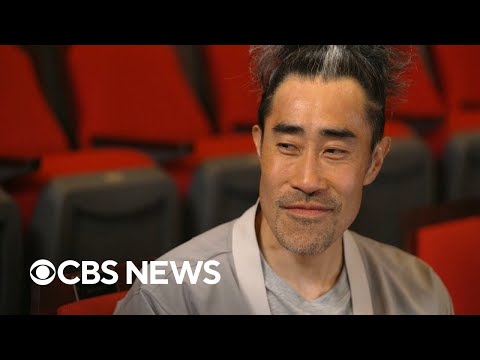
- Unbeknownst to him the show was broadcast weekly across Japan to more than 15 million viewers.
Unbeknownst to him the show was broadcast weekly across Japan to more than 15 million viewers.
- Unbeknownst to him, the show was broadcast weekly across Japan to more than 15 million viewers.
Unbeknownst to him, the show was broadcast weekly across Japan to more than 15 million viewers.
10 Songs That Got Banned for Being Too Disturbing

- It's not surprising that such a song had limited promotion aimed at the general public via broadcast.
It's not surprising that such a song had limited promotion aimed at the general public via broadcast.
- It had to be edited according to the rules of censorship at the time, but even then, it was rarely broadcast since what happened at Columbine High School.
It had to be edited according to the rules of censorship at the time, but even then, it was rarely broadcast since what happened at Columbine High School.
Tsunami warning in Japan after strong earthquake | BBC News

- Now, the very latest information that we have is that a news conference with Japan's Weather Agency is expected to be broadcast in the next hour.
Now, the very latest information that we have is that a news conference with Japan's Weather Agency is expected to be broadcast in the next hour.
- Now, the very latest information that we have is that a news conference with Japan's weather agency is expected to be broadcast in the next hour.
Now, the very latest information that we have is that a news conference with Japan's weather agency is expected to be broadcast in the next hour.
Antimatter in Sci-Fi Rundown
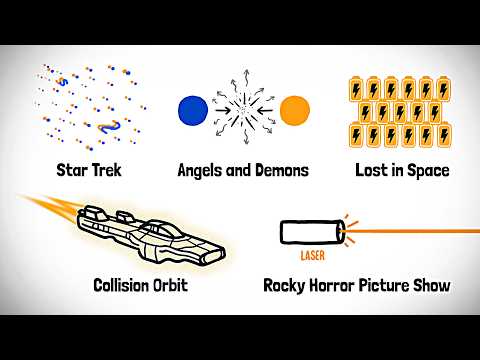
- Computer, commence broadcast of Jeffrey Hanks' antimatter briefing.
Computer, commence broadcast of Jeffrey Hanks' antimatter briefing.
- Computer, commence broadcast of Jeffrey Hengst's antimatter briefing.
Computer, commence broadcast of Jeffrey Hengst's antimatter briefing.
ENGLISH SPEECH | KING CHARLES III: First Speech as King (English Subtitles)

- In 1947, on her 21st birthday, she pledged in a broadcast from Cape Town to the Commonwealth to devote her life, whether it be short or long, to the service of her peoples.
In 1947, on her 21st birthday, she pledged in a broadcast from Cape Town to the Commonwealth to devote her life, whether it be short or long, to the service of her peoples.
- In 1947, on her 21st birthday, she pledged in a broadcast from Cape Town to the Commonwealth to devote her life, whether it be short or long, to the service of her peoples.
In 1947, on her 21st birthday, she pledged in a broadcast from Cape Town to the Commonwealth to devote her life, whether it be short or long, to the service of her peoples.
OD4 Unit 13 From News to Smartphones
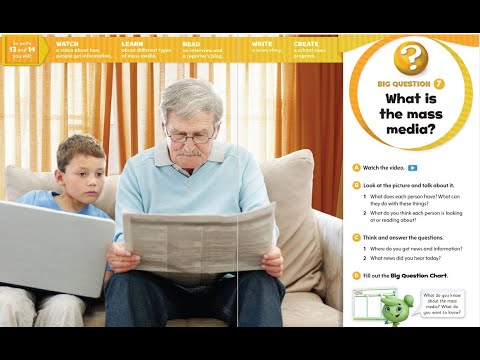
- It began about the same time as movies, but the first radio station didn't broadcast until 1920. Today, there are over 44,000 radio stations around the world.
It began about the same time as movies, but the first radio station didn't broadcast until 1920. Today, there are over 44,000 radio stations around the world.
- Some stations broadcast the news all the time.
Some stations broadcast the news all the time.