barbarous
US /ˈbɑ:rbərəs/
・UK /ˈbɑ:bərəs/
C1
adj.AdjectiveMercilessly harsh or cruel
The king's barbarous punishments scared the townspeople.
Video subtitles
The Natives and the English - Crash Course US History #3

- "The righteous god hath heightened our calamity and given commission to the barbarous heathen to rise up against us
"The righteous god hath heightened our calamity and given commission to the barbarous heathen to rise up against us
- "The righteous God hath heightened our calamity and given commission to the barbarous heathen to rise up against us and to become a smart rod and a severe scourge to us in burning and depopulating several hopeful plantations, murdering many of our people of all sorts,
"The righteous God hath heightened our calamity and given commission to the barbarous heathen to rise up against us and to become a smart rod and a severe scourge to us in burning and depopulating several hopeful plantations, murdering many of our people of all sorts,
HISTORY OF IDEAS - Manners

- Rousseau now contrasts favourably with modern mannered people. Rousseau tells us that people living in what he calls the state of nature were, in his eyes, far superior to educated and mannered Parisians. Their manners may have been simple, but they were honest and forthright, without the sins of what he now terms the over-civilised. Rousseau retells the story of civilisation as one of loss and decline, from a primordial state of fresh-faced curiosity, honesty and enthusiasm, to barbarous over-politeness, fakery and deceit. He describes the elaborate French court at Versailles as less civilised than an early human cave. Readers across Europe are astonished, and not a little impressed, by this impudence. For hundreds of years, moralists have been arguing that our natural selves are wild, harmful, over-sexual and dangerous, and that we must learn to tame them for the sake of others. Now Rousseau suggests the diametrical opposite. Civilisation has gone too far, it's our mannered selves that have become the problem, and the task of a properly evolved civilisation is to throw off the chains of manners, to relax us, strip off the etiquette and return to primitive frankness. Rousseau's point continues to echo down to our own times. It is his voice we can hear whenever someone sticks up for the simpler life, and suggests we dress less formally, eat dinner more casually and more readily say whatever is passing through our minds. New York, United States, 1827. A French aristocrat, Alexis de Tocqueville, is on a tour of the young United States in an effort to understand the spirit of a new kind of society, a democracy. He is immediately struck by American manners, or lack thereof. In Europe, reflects de Tocqueville, manners have been codified to emphasise hierarchical differences between people. Ordinary people defer to aristocrats, aristocrats to royalty, and so on. But in the United States, everything is done so as to suggest that there are no differences between people. No one takes off their hat to anyone, a postman can casually greet a judge, a mule driver can strike up cheerful banter with a wealthy merchant, and one cannot tell by someone's clothes whether they might be living in a mansion or a hut. Expressions like how you doing and hi are heard everywhere across the new republic. It could be charming, but the aristocratic de Tocqueville wryly notes a problem. These casual manners do not do away with class and wealth differences. They merely sentimentally disguise them. The manners of old Europe have been accused of being cruel in their stress on hierarchy.
Rousseau now contrasts favourably with modern mannered people. Rousseau tells us that people living in what he calls the state of nature were, in his eyes, far superior to educated and mannered Parisians. Their manners may have been simple, but they were honest and forthright, without the sins of what he now terms the over-civilised. Rousseau retells the story of civilisation as one of loss and decline, from a primordial state of fresh-faced curiosity, honesty and enthusiasm, to barbarous over-politeness, fakery and deceit. He describes the elaborate French court at Versailles as less civilised than an early human cave. Readers across Europe are astonished, and not a little impressed, by this impudence. For hundreds of years, moralists have been arguing that our natural selves are wild, harmful, over-sexual and dangerous, and that we must learn to tame them for the sake of others. Now Rousseau suggests the diametrical opposite. Civilisation has gone too far, it's our mannered selves that have become the problem, and the task of a properly evolved civilisation is to throw off the chains of manners, to relax us, strip off the etiquette and return to primitive frankness. Rousseau's point continues to echo down to our own times. It is his voice we can hear whenever someone sticks up for the simpler life, and suggests we dress less formally, eat dinner more casually and more readily say whatever is passing through our minds. New York, United States, 1827. A French aristocrat, Alexis de Tocqueville, is on a tour of the young United States in an effort to understand the spirit of a new kind of society, a democracy. He is immediately struck by American manners, or lack thereof. In Europe, reflects de Tocqueville, manners have been codified to emphasise hierarchical differences between people. Ordinary people defer to aristocrats, aristocrats to royalty, and so on. But in the United States, everything is done so as to suggest that there are no differences between people. No one takes off their hat to anyone, a postman can casually greet a judge, a mule driver can strike up cheerful banter with a wealthy merchant, and one cannot tell by someone's clothes whether they might be living in a mansion or a hut. Expressions like how you doing and hi are heard everywhere across the new republic. It could be charming, but the aristocratic de Tocqueville wryly notes a problem. These casual manners do not do away with class and wealth differences. They merely sentimentally disguise them. The manners of old Europe have been accused of being cruel in their stress on hierarchy.
- enthusiasm, to barbarous over-politeness, fakery, and deceit.
enthusiasm, to barbarous over-politeness, fakery, and deceit.
Fall of The Roman Empire...in the 15th Century: Crash Course World History #12

- They thought you were barbarous.
They thought you were barbarous.
- They thought you barbarous. They thought that people wearing you was
They thought you barbarous. They thought that people wearing you was
Why The British Museum Has The Parthenon Marbles
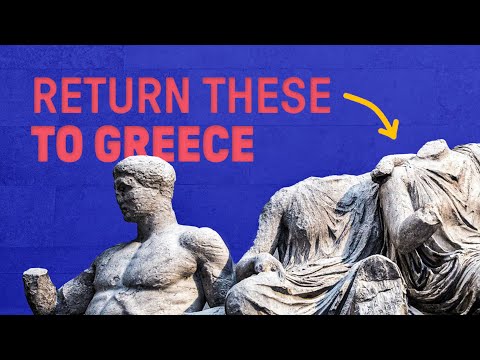
- In a letter to Elgin, Lucieri even admitted that he was, quote, "obliged to be a little barbarous." More damage was done during the shipping phase.
In a letter to Elgin, Lucieri even admitted that he was, quote, "obliged to be a little barbarous." More damage was done during the shipping phase.
- In a letter to Elgin, Lucieri even admitted that he was obliged to be a little barbarous.
In a letter to Elgin, Lucieri even admitted that he was obliged to be a little barbarous.
Part 1 - The Last of the Mohicans Audiobook by James Fenimore Cooper (Chs 01-05)
- Numberless recent massacres were still vivid in their recollections, nor was there any ear in the provinces so deaf as not to have drunk in with avidity the narrative of some fearful tale of midnight murder, in which the Natas of the forest were the principal and barbarous actors.
Numberless recent massacres were still vivid in their recollections, nor was there any ear in the provinces so deaf as not to have drunk in with avidity the narrative of some fearful tale of midnight murder, in which the Natas of the forest were the principal and barbarous actors.
- which the natives of the forests were the principal and barbarous actors.
which the natives of the forests were the principal and barbarous actors.
The Call of the Wild Audiobook by Jack London

- François swore strange, barbarous oaths and stamped the snow in futile rage and tore his hair.
François swore strange, barbarous oaths and stamped the snow in futile rage and tore his hair.
- Francois swore strange barbarous oaths, and stamped the snow in futile rage, and tore
Francois swore strange barbarous oaths, and stamped the snow in futile rage, and tore
Book 07 - The Hunchback of Notre Dame Audiobook by Victor Hugo (Chs 1-8)
- People are no longer so barbarous.
People are no longer so barbarous.
- very bad form of speech; people are no longer so barbarous.
very bad form of speech; people are no longer so barbarous.