architectures
US
・UK
A2
n. pl.Noun (plural)Designs and constructions of buildings
He read about the architectures of the world
Video subtitles
Lesson 1: Practical Deep Learning for Coders
- Now because we also want tune our algorithm, in terms of different architectures and different
Now because we also want tune our algorithm, in terms of different architectures and different
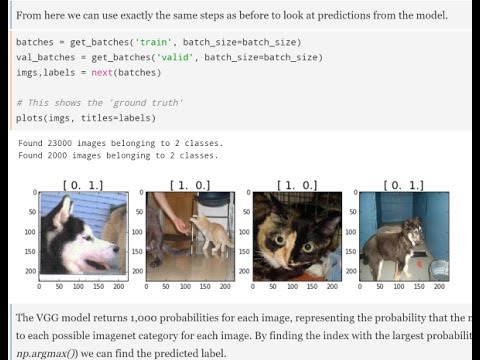
- Now, because we also want to kind of tune our algorithm in terms of different architectures and different parameters and so forth, which we'll talk about, it's also a very good idea to split your training set further into a training set and a validation set.
Now, because we also want to kind of tune our algorithm in terms of different architectures and different parameters and so forth, which we'll talk about, it's also a very good idea to split your training set further into a training set and a validation set.
[HD] Steve Jobs iPhone Keynote 2007 [English subtitle]

- architectures right you know internet architectures allow you now to take the
architectures right you know internet architectures allow you now to take the
- And internet architectures, right?
And internet architectures, right?
How AI Taught Itself to See [DINOv3]
- In our case, both student and teacher models have the same architectures and model size.
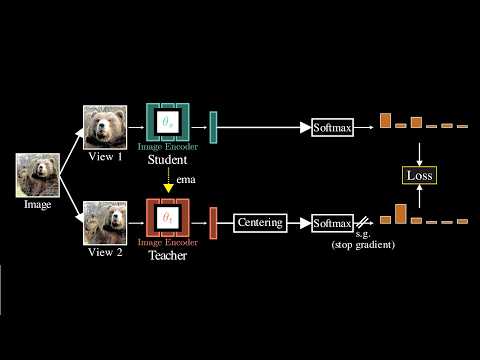
In our case, both student and teacher models have the same architectures and model size.
- In our case, both student and teacher models have the same architectures and model size.
In our case, both student and teacher models have the same architectures and model size.
Building AI Agents that actually automate Knowledge Work - Jerry Liu, LlamaIndex
- We talked about a lot of operations basically make this document toolbox really good and So now that you plugged it into an agent, what are the different agent architectures and what are the use cases that are implied by them?
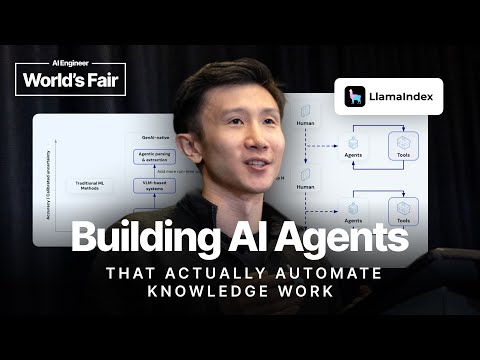
We talked about a lot of operations basically make this document toolbox really good and So now that you plugged it into an agent, what are the different agent architectures and what are the use cases that are implied by them?
- As many of you probably know from building agents yourselves, agent orchestration ranges from more constrained architectures to unconstrained architectures.
As many of you probably know from building agents yourselves, agent orchestration ranges from more constrained architectures to unconstrained architectures.
The Next Breakthrough In AI Agents Is Here

- What distinguishes successful wrappers from their less effective counterparts is typically a bunch of things, intuitive UI, proprietary evals, much more careful fine tuning of foundational models, and thoughtfully designed multi-agent architectures.
What distinguishes successful wrappers from their less effective counterparts is typically a bunch of things, intuitive UI, proprietary evals, much more careful fine tuning of foundational models, and thoughtfully designed multi-agent architectures.
- and thoughtfully designed multi-agent architectures.
and thoughtfully designed multi-agent architectures.
『Taiwan’s Modernization !』History of Taiwan

- Okay, we now know that many antique and prestigious architectures we see nowadays along with the change of lifestyle, a huge part was due to the Japanese rule in the past 50 years.
Okay, we now know that many antique and prestigious architectures we see nowadays along with the change of lifestyle, a huge part was due to the Japanese rule in the past 50 years.
- We now know that many antique and prestigious architectures we see nowadays, along with the change of lifestyle, a huge part was due to the Japanese rule in the past 50 years.
We now know that many antique and prestigious architectures we see nowadays, along with the change of lifestyle, a huge part was due to the Japanese rule in the past 50 years.
VR at Google - Google I/O 2016

- We built it to be flexible to support multiple camera architectures.
We built it to be flexible to support multiple camera architectures.
- architectures.
architectures.
Conversation with NVIDIA CEO Jensen Huang: Satya Nadella at Microsoft Build 2025

- And so you want to, you want to innovate and you want to integrate new data centers, new computer architectures every year.
And so you want to, you want to innovate and you want to integrate new data centers, new computer architectures every year.
- And so you want to innovate and you want to integrate new data centers, new computer architectures every year.
And so you want to innovate and you want to integrate new data centers, new computer architectures every year.
An Old Problem - Ep. 5 (Deep Learning SIMPLIFIED)

- Deep architectures are your best and sometimes your only choice for complex machine learning problems such as facial recognition.
Deep architectures are your best and sometimes your only choice for complex machine learning problems such as facial recognition.
- Deep architectures are your best and sometimes your only choice for complex machine learning
Deep architectures are your best and sometimes your only choice for complex machine learning
What Is an AI Stack? LLMs, RAG, & AI Hardware

- This layer is very quickly evolving with new protocols like MCP and new architectures for how to best orchestrate increasingly complex tasks.
This layer is very quickly evolving with new protocols like MCP and new architectures for how to best orchestrate increasingly complex tasks.
- This layer is very quickly evolving with new protocols like MCP and new architectures for how to best orchestrate increasingly complex tasks.
This layer is very quickly evolving with new protocols like MCP and new architectures for how to best orchestrate increasingly complex tasks.